Business · August 14, 2026 · 8 min read
PX Shop's New Drop Is a Product Demo Wearing a Hoodie
This month's PX Shop drop is less about hoodies and more about proving that Whistlr's Storefront tools actually work for creators selling physical goods.
Every platform that gets big enough eventually launches merch, and almost none of it means anything. It's a logo on a hoodie, sold at a markup, worn mostly by employees who got it for free and a handful of loyalists who would have bought a plain sticker just as happily. We're rolling out a new drop in the PX Shop this month, and the honest pitch for why you should care isn't the hoodie itself. It's what the hoodie is quietly sitting on top of — a commerce system ETAPX is willing to run its own inventory through before handing it to anyone else.
What's actually landing this month
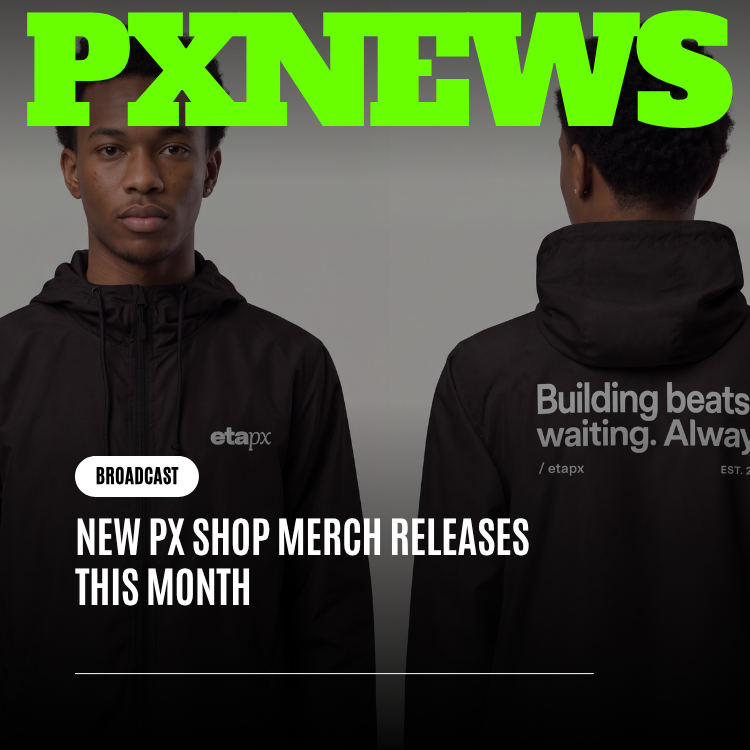
The drop itself is straightforward on purpose: a run of apparel and everyday objects, not a hype release. Think hoodies and crewnecks in a couple of colorways, stickers sized for a laptop lid or a stream deck, a pin set, some drinkware, and a small batch of accessories built around the Whistlr and PX marks. Nothing exotic, nothing numbered like a limited sneaker drop, nothing that requires a countdown timer or a waiting room. It's a normal-sized catalog refresh, timed so a batch of items lands together instead of trickling out one SKU at a time over a quarter. What's more interesting than any single item is where it's sold. PX Shop isn't a print-on-demand storefront bolted onto a marketing page as an afterthought — it's ETAPX's own commerce operation, and it runs on the same rails that Storefront gives to every creator on Whistlr. When you buy something from this month's drop, you're using the exact purchase flow a creator building their own shop on Whistlr would ask their own audience to use, from listing to checkout to fulfillment tracking.
Merch is a strange thing for a live-streaming company to spend time on
Whistlr's whole pitch is built around digital support happening in real time. A viewer sends Gems mid-stream, the creator sees it land on screen, and the payout shows up in a day or two instead of vanishing into a thirty-day hold the way it does on a lot of platforms that treat creators like a liability to be delayed. That's the core loop, and it's digital from end to end — no shipping, no inventory, no warehouse. So why bother with T-shirts and pin sets at all, when the whole point of the platform is speed? Because digital support has a ceiling that has nothing to do with how generous a viewer is willing to be. A viewer can send Gems every night for a month and still have nothing physical to point to afterward — no shelf, no closet, no object that survives past the stream that prompted it. Merch fixes a different problem entirely. It's not a replacement for Gems, it's a different register of the same underlying relationship — one that converts ongoing digital support into a single object a person actually keeps, wears, and gets asked about later.
Support that only exists as a number inside an app is real, but it's forgettable by design. Support you can hold onto tends not to be.
— ETAPX, internal note on Storefront
The part that actually matters: this is Storefront, not a side project
Here's the tradeoff most companies quietly hide from you when they launch a company store: building a first-party merch shop is either a marketing exercise that has nothing to do with the actual product, or it's a real stress test of commerce infrastructure the company is asking its own users to trust with their livelihood. Plenty of platforms choose the first option, because it's cheaper and nobody notices the difference from the outside. We built PX Shop as the second kind on purpose, because the alternative would have made every claim we make about Storefront a little bit hollow.
Storefront is the feature inside Creator Studio that lets a creator sell physical or digital goods directly to their own audience, the same way the WTC tab lets them publish and price the Gems a viewer can send during a live stream. It's built for a creator who's spent months building an audience across streams, Circuits, and Flow, and who wants a way to sell something more permanent than a single moment — a print, a sticker pack, a piece of apparel carrying their own mark instead of ETAPX's. The creator sets the price and owns the relationship with the buyer. Here's what that's actually doing underneath a listing, whether it's a creator's own shop or PX Shop's catalog this month:
- Listing and inventory handled inside Creator Studio itself, without a separate storefront platform bolted on the side
- Checkout that matches the trust and speed of the Gems flow creators already rely on for support
- Physical and digital sales sitting in the same Earnings view as Gems, instead of a separate dashboard a creator has to check on its own
- Access gated behind Business+, the same account tier that unlocks Gems and the WTC tab, so the whole monetization stack lives in one place
The obvious question: why not just point creators at Shopify
It's a fair question, and the honest answer is that an off-the-shelf storefront is a perfectly reasonable choice for plenty of sellers. What it isn't is connected to anything else a creator does on Whistlr. A Shopify shop doesn't know that a buyer showed up because they've been sending Gems every week, doesn't sit in the same Earnings view as a payout, and doesn't share a login, a brand identity, or a support relationship with the account a creator has spent months building through live streams. Every extra system a creator has to stitch together themselves is a place for the relationship with their audience to leak out to some other platform's dashboard. Storefront exists so that doesn't have to happen — so the same account that goes live, publishes Gems on the WTC tab, and posts to Flow is also the account selling the goods, with one login and one place to look at what it's earning.
From Gems to goods: two ways to convert the same support
Think of Gems and Storefront as two ends of the same underlying behavior, not two unrelated features that happen to live in the same app. Gems are for the moment — a viewer watching a stream right now, reacting to something happening live, sending support that lands in the creator's account within a day or two. Storefront is for the aftermath — the same viewer, a week or a month later, wanting something that isn't tied to any single stream, something they can wear to the next meetup, set on a desk, or hand to a friend who's never even watched the creator go live.
Why we didn't spin this off as a separate app
It would have been easier, in some ways, to build PX Shop as its own thing entirely, disconnected from Creator Studio and free to change on its own schedule without touching anything creator-facing. Easier to build, easier to redesign, easier to hand off to a different team. We didn't, because the whole argument for Storefront only holds up if PX Shop is actually running on the same system creators use to sell their own goods. If ETAPX's own shop needed different infrastructure than the one we hand to creators, that mismatch would be the tell that Storefront isn't really ready for real volume yet — that it works in a demo but not under an actual drop with actual inventory and actual shipping deadlines. Running our own commerce operation on our own plumbing, with real customers and real returns, is the test we'd want a creator to be able to run on us before they trust it with their own shop.
Why this matters even if you never buy a hoodie
Most people reading about a merch drop have no plans to buy anything from it, and that's fine — this was never really meant to be a shopping post. The reason it's worth writing about at all is what a functioning storefront signals for everyone building on Whistlr, not just the people who want a new hoodie. A platform that talks about creator monetization but only ever ships one revenue lever eventually starts asking creators to be grateful for whatever single tool it hands them, take it or leave it. A platform that ships a second lever, uses it on itself first with real stakes attached, and then hands the identical tool to creators is making a different kind of promise — that the tools are solid enough to survive contact with an actual product, not just a pitch deck.
It's also a small, useful data point about the kind of company ETAPX is trying to be around Whistlr. The same team building Influxx, Ocsidian, and GLSRM elsewhere in the ETAPX portfolio is the team deciding what ships inside Creator Studio, and a habit of testing infrastructure on the company's own operation before handing it to users shows up across more than one of those products. The drop lands in the PX Shop this month. Buy something or don't — either way, the more useful thing to notice is that it exists at all, running on the same Storefront a creator on Business+ could be using for their own goods by the time you're reading this.
Frequently asked questions
What is in the new PX Shop merch drop?
The drop is a normal-sized catalog refresh rather than a hype release. It includes hoodies and crewnecks in a couple of colorways, stickers sized for a laptop lid or stream deck, a pin set, drinkware, and a small batch of accessories built around the Whistlr and PX marks. Nothing is numbered as a limited release, and there is no countdown timer or waiting room.
What is PX Shop?
PX Shop is ETAPX's own commerce operation, not a print-on-demand store attached to a marketing page. It runs on the same Storefront system Whistlr gives every creator, so buying from PX Shop uses the same purchase flow a creator's audience would use, from listing to checkout to fulfillment tracking. ETAPX uses it to run real inventory through that system before creators rely on it.
What is Storefront in Whistlr Creator Studio?
Storefront is the Creator Studio feature that lets a creator sell physical or digital goods directly to their own audience. Listings and inventory are handled inside Creator Studio, sales appear in the same Earnings view as Gems, and the creator sets the price and owns the relationship with the buyer. Access requires Business+, the same tier that unlocks Gems and the WTC tab.
Why use Whistlr Storefront instead of Shopify?
An off-the-shelf store like Shopify is a reasonable choice for many sellers, but it is not connected to anything else a creator does on Whistlr. Storefront shares one login with the account that goes live, publishes Gems on the WTC tab, and posts to Flow, and its sales show up in the same Earnings view as payouts. That keeps the relationship with the audience in one place.