Business · August 18, 2026 · 7 min read
The Local Business Bet: Why Whistlr Isn't Chasing National Creators
Whistlr's growth plan skips the national-creator arms race in favor of local businesses turning real neighborhood audiences into live sales.
Every live-commerce platform that has ever chased scale has made the same early decision: go after the creators who already have a national audience. Big names, existing follower counts, a built-in reason for viewers to show up on day one. It is the fastest way to make a launch look busy. It is also, we think, the wrong foundation if the goal is a platform people actually rely on for years, not a platform that looks good in a first week of screenshots.
The obvious play, and why we skipped it
Whistlr could have spent its early energy courting the same tier of national creators every other live app competes for. That is a real strategy and it works for some platforms. It also means competing on the one thing a small, independent platform can least afford to compete on: who can pay the biggest names the most money to show up first, fighting on someone else's terms, for creators who owe the platform no loyalty because ten other apps are bidding for the exact same stream, the exact same afternoon.
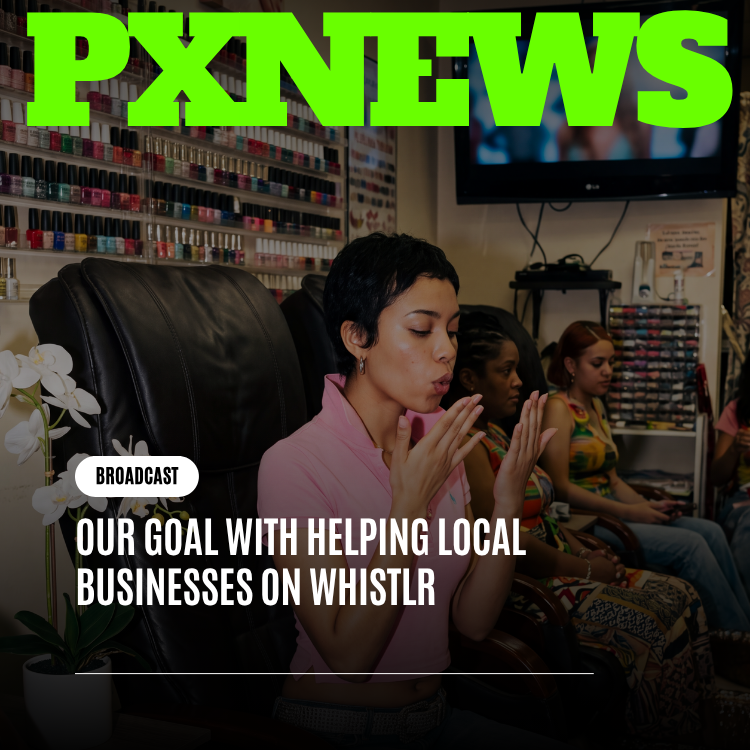
Local businesses are a different bet entirely. A bakery, a boutique, a tattoo studio, a small gym, a plant shop with forty regulars and a waitlist for the Saturday repotting class — these are not accounts chasing virality. They already have an audience. It just is not one an algorithmic, national feed is built to find, because that audience is a neighborhood, not a demographic bucket. Our job is not to manufacture reach for them out of nowhere. It is to give the reach they already have somewhere real to convert.
What a local business actually needs from a live platform
Ask a small business what they need from social platforms and you almost never hear more followers. You hear something closer to: people already know we exist, so give us a way to turn that into an actual sale, an actual booking, an actual walk-in, without hiring someone to run it. That is a different product problem than growing a creator's national following, and most platforms are not built to solve it, because it is not the problem their business model rewards them for solving. A platform paid on time-in-app wants everyone, everywhere, watching for as long as possible. A local business does not need everyone. It needs the couple hundred people within actual driving distance who are already customers, plus the couple hundred more who would be if they saw the right thing at the right moment — a smaller, sharper target that changes what the product needs to do well.
- Go live with no follower minimum, so a shop with a loyal but modest local following isn't locked out of the exact tool that would help them most.
- Stream from whatever the business already has — a phone, an RTMP encoder like OBS or Streamlabs, or the native Studio — instead of requiring a production setup a two-person storefront can't justify.
- Sell the actual product during the stream through Storefront, so a live audience becomes a transaction instead of a nice comment thread.
- Turn real-time support into real-time income through Gems, with payouts landing in one to two days instead of sitting in a thirty-day hold that a small business's cash flow can't absorb.
Storefront without the geography problem
Storefront is where this argument gets concrete. A national creator selling merch to a scattered audience is solving a shipping and logistics problem at scale. A local flower shop going live to sell out a Friday bouquet drop is solving something much simpler and much more immediate — people who already know where the shop is, deciding in real time whether to reserve one before they're gone. The live format does something a static product listing cannot: it lets the business show the actual bouquets, answer a question on camera, and close the sale in the same minute someone was thinking about walking over.
A national creator is trying to reach people they'll never meet. A local business is trying to reach people they already know, one more time, at the right moment. Those are not the same product problem, and we don't think one platform design should pretend they are.
— ETAPX, internal product principle
The Business+ path was not designed with a media company in mind
Business+ is the account tier that unlocks Gems, Earnings, and the WTC tab inside Creator Studio, where an account publishes and prices the Gems viewers can send during a stream. Applying at partners.whistlr.business does not ask whether the applicant has a media kit or a management team. It asks whether they have something real to offer an audience, which a coffee roaster or a fitness studio has just as much as a full-time creator does.
That matters because a lot of monetization tooling in this industry is quietly built for people who treat content as their entire job. A local business owner does not have that kind of time. They have an hour between the lunch rush and closing, maybe two nights a week when foot traffic is slow enough to go live from the counter. The tools have to work inside that reality — no follower minimum before it's worth trying, no elaborate production requirement, a payout schedule fast enough to matter to a business paying rent every month rather than banking a long-term creator career.
Why a big-brand-only platform misses this entirely
A platform that only courts large, recognizable brands ends up building for an audience of one kind of account and calling it universal. The features get shaped around brand safety teams, approval workflows, and campaigns planned weeks in advance — reasonable things for a national advertiser, actively hostile to a business owner who wants to go live twenty minutes from now because the bread just came out of the oven and it looks incredible. There's also a simpler point underneath the product argument: local businesses are, in aggregate, a much bigger and much more durable base than a handful of national names ever will be. Every city has thousands of them. Most will never go viral, and most don't need to — they need a fraction of their existing customer base to show up consistently, buy something, and come back. A platform built around that reality has a more stable floor than one that lives or dies by whichever handful of big accounts decide to stay loyal this quarter.
How this shows up across the rest of the app
None of this lives only in Storefront and Gems. Circuits, the close-circle sharing surface, is a natural fit for a business's actual regulars — the people who already follow along, not a cold algorithmic audience. Flow puts a well-timed live announcement in front of people who have shown interest before, which matters more to a local shop than broad discovery ever will. Whistlr Creator Studio, the standalone desktop and web app at whistlr.studio, gives a business owner a place to manage Storefront listings, price Gems on the WTC tab, and check Earnings without needing the full mobile app open on a counter phone during business hours. None of these are exotic features. They are ordinary tools, pointed deliberately at an audience — small, local, time-constrained — that most live platforms treat as an afterthought behind their national creator programs.
What we're actually trying to prove
We are not claiming every local business should be live-streaming, and we're not claiming Whistlr has this fully figured out yet. What we are claiming is narrower: that a live-commerce platform which only optimizes for national reach is optimizing for the wrong kind of scale. Real local audiences — the ones who already know a business by name, already walk past the storefront, already have a reason to buy — are worth building for directly, not treating as a smaller version of the national-creator problem. If that bet is right, the measure of success isn't a handful of breakout local accounts with huge followings. It's whether a normal week for an ordinary local business — the kind with no marketing budget and no follower minimum to clear — gets measurably better because they went live. That's a smaller claim than most platforms make about themselves. We'd rather make the smaller claim and actually be right about it.
Frequently asked questions
Why is Whistlr focusing on local businesses instead of national creators?
Whistlr chose not to compete for national creators, because that means competing on who can pay the biggest names the most to show up first. Local businesses already have an audience in their neighborhood that national feeds aren't built to find. Whistlr's aim is to give that existing reach somewhere real to convert into sales, bookings, and walk-ins, which it sees as a more durable base than a handful of big accounts.
Can a small business go live on Whistlr without a lot of followers?
Yes. Whistlr has no follower minimum, so a shop with a loyal but modest local following can go live. A business can stream from a phone, an RTMP encoder like OBS or Streamlabs, or the native Studio, without a production setup. During a stream it can sell products through Storefront and receive Gems from viewers as real-time support.
How does a local business make money on Whistlr?
A business can sell its products during a live stream through Storefront and receive Gems, which viewers send as real-time support. Gems and Earnings are unlocked with a Business+ account. Gems pay out in one to two days rather than sitting in a thirty-day hold, which matters for a business covering rent or next week's inventory order rather than building a creator career over years.
What is Whistlr Business+ and who can apply?
Business+ is the Whistlr account tier that unlocks Gems, Earnings, and the WTC tab inside Creator Studio, where an account publishes and prices the Gems viewers can send during a stream. Applications are made at partners.whistlr.business. The application doesn't ask for a media kit or a management team. It asks whether the applicant has something real to offer an audience, which a coffee roaster or fitness studio has as much as a full-time creator.