Community · September 21, 2026 · 15 min read
How Trends Start on Whistlr: Following a Song, a Jersey and a Joke From One SubCircuit to Everyone
How trends start on Whistlr: inside SubCircuits, carried by friends, then surfaced by Trending. Follow a song, a jersey and a joke from one corner to everyone.
Here is the short answer to how trends start on Whistlr: they start small, inside a Circuit or SubCircuit, among people who already share an interest. They travel outward through friend-first discovery, one trusted person at a time. And they show up on the Trending tab only once real momentum builds across hashtags, news and the Circuit threads people are genuinely engaging with. Nobody at ETAPX picks them. Our job is to make sure the path from a tiny corner of the app to everyone's feed stays open, honest and hard to fake.
That answer is accurate, but it's also a little abstract. So in this piece we're going to do something more useful: follow three kinds of trends, a sound, a look and a phrase, through the actual parts of the product they pass through. Along the way we'll explain how the Whistlr Trending tab weighs what it sees, why rough posts so often beat polished ones, what we deliberately refuse to do to a trend, and how you can spot the next one weeks before it hits your group chat.
How do trends start on Whistlr? The short lifecycle
Every trend we've watched on the platform looks different up close. From a distance, though, most of them follow roughly the same arc. Knowing the arc is the easiest way to understand why Whistlr tends to feel current, and why the stuff that surfaces usually arrives with its meaning still attached.
- A spark inside a community. Someone in a SubCircuit posts a track, a fit, an edit style or a phrase. The people around them get it immediately, because they share the context.
- Local adoption. Other members pick it up, remix it and argue about it. The idea gets sharper before anyone outside the community has seen it.
- The first hop out. Someone who belongs to that SubCircuit and also to a wider friend group shares it. Friend-first discovery carries it along real relationships rather than throwing it at strangers.
- Format jumping. The idea moves across surfaces: from a Thought to a caption, from a Story to a Mini, from a Mini to a live stream conversation, from a stream to someone's profile.
- Visible momentum. Hashtag activity picks up, Circuit threads around it draw thoughtful replies, and it starts appearing on the Trending tab next to what's happening in the wider world.
- Settling in. Some trends fade within a week. Others become part of how a community talks, dresses or listens. Either way, the community decides, not us.
The important thing about that list is the order. On a lot of platforms, step five comes first: a system decides something is big and pushes it everywhere, and the community is left to catch up. On Whistlr, the visible momentum is the result of everything that happened before it. That ordering is why we describe the app as a mirror of the current culture. It reflects what people are already doing instead of telling them what to do next.
Why SubCircuits are where trends start on Whistlr
If you're new here, a quick definition. A Circuit is a real community on Whistlr, a group of people who chose to gather around something together. A SubCircuit narrows that into a specific shared interest inside it. A Circuit might be about a city's music scene. A SubCircuit inside it might be about one producer's sound, or one neighborhood's open mic nights, or one very particular argument about drum samples.
That structure is the single biggest reason trends start where they do. Culture needs somewhere to form before it goes wide. In a giant undifferentiated feed, a new slang term or editing style has to compete with everything at once, and it usually gets flattened before it has a chance to mean anything. Inside a SubCircuit, it has a room full of people who understand it. They test it, refine it and decide whether it's actually good. By the time it leaves, it has been shaped by the people closest to it.
Picture a SubCircuit of about forty people who all follow the same regional drill scene. One of them drops a rough instrumental at 1am. By morning, six members have used it as a backing track. By the weekend, the SubCircuit has a running joke about the producer's habit of leaving a cough in the intro. None of that would make sense to someone outside the group yet. It doesn't need to. That's the stage where a trend gets its personality.
How friend-first discovery carries a trend outward
Once something has taken shape inside a community, it needs a way out. On Whistlr, that path runs through people. Our discovery is friend-first, which means new things reach you through real connection paths: friends of friends, shared Circuits and mutual interests. You don't see a SubCircuit's running joke because a model predicted it would make you react. You see it because someone you actually know, or someone close to them, thought it was worth passing on.
That's how culture has always moved offline. You start listening to a song because your roommate won't stop playing it. You start saying a phrase because your group chat won't stop saying it. Whistlr's discovery is built to work the same way, and the side effect is that trends travel at a human pace with human context. When something reaches you, it usually comes with a person attached who can explain why it's funny, why it matters or which season that jersey is from.
There's a tradeoff here we're comfortable with. Friend-first discovery means a trend can take a little longer to reach someone with no connection to the community that started it. We think that's the right cost. A trend that has passed through a dozen real people on its way to you is more likely to be something people genuinely care about than one that was injected into a million feeds at once.
How the Whistlr Trending tab decides what shows up
The Trending tab is where a trend becomes visible to the whole platform, so it's worth being specific about how it works. We built it to show a fuller and more honest picture than a single list of whatever got the loudest reaction in the last hour. It brings several kinds of signal together and weighs them toward what people actually value.
| Signal | What it captures | How it's treated |
|---|---|---|
| Hashtag momentum | Topics and tags people are actively posting around | Shows what the community is talking about right now |
| Current news | What's happening in the wider world outside the app | Keeps Trending connected to real events, not only platform chatter |
| Circuit threads | Community conversations drawing the most thoughtful participation | Rewards depth of discussion, not just volume |
| Deliberate actions | Comments, shares and saves | Weighted more heavily than quick taps |
| Watch-through and return visits | What people actually finish and come back to | Part of our shift toward what people genuinely care about |
| Negative signals | Quick skips, "not interested," hides, mutes and reports | Counted alongside positive signals so loud content people avoid isn't rewarded |
Two rows in that table do most of the work of keeping Trending honest. The first is the weight given to deliberate actions. Saving a Mini, sharing a track to your Story or writing a real comment takes intent. A quick tap doesn't. The second is the negative signals. If people keep skipping something, hiding it or telling us they're not interested, that counts. Content that people are actively trying to get away from shouldn't climb just because it's loud.
Put together, Trending ends up reflecting what people care about rather than what merely interrupted their scroll. That is a much better working definition of "the current culture" than raw reaction counts, and it's the reason a slow-building SubCircuit favorite can sit on Trending next to a major news story without either one drowning the other out.
Three trend paths we see on Whistlr again and again
Abstract lifecycles only go so far. Here are the three shapes we see most often, traced through the specific parts of the app they move through.
A sound: from a producer's SubCircuit to everyone's profile
Music is where culture on Whistlr is loudest, and it was that way long before Waves had a name. People were already sharing songs in captions, in Stories and in Circuits built around a genre or an artist's fanbase. Waves gave that habit a proper home, and now music runs through almost every corner of the app.
A typical path looks like this. A track starts inside a producer's SubCircuit. Members put it in their Stories. Someone uses it as the soundtrack to a Mini, and a wave of Minis follows. Before long it shows up on people's profiles as part of their current rotation. Every hop in that chain was made by a person someone trusts, not by a chart position. That's how independent and upcoming artists keep breaking through here, and it's why the music you hear on the platform includes regional and niche sounds that a global ranking system would have smoothed away.
A look: the throwback jersey
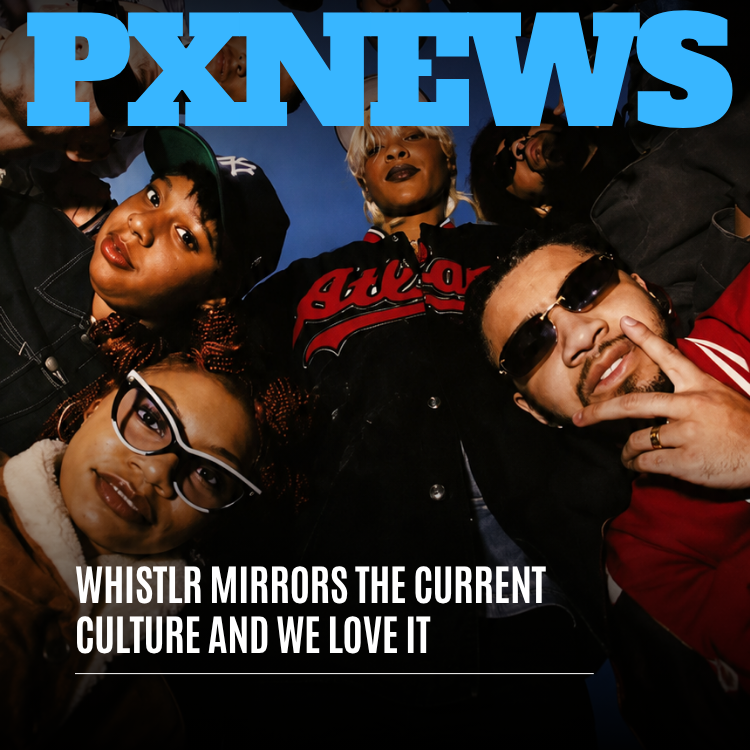
Culture is visible before anyone names it. It shows up in what people wear: a vintage jersey, a particular pair of frames, the sneaker everyone is trying to get before it sells out. Because the people posting on Whistlr are the people setting the style, the feed works as a surprisingly accurate real-time lookbook.
Sports culture shows how this plays out. A throwback jersey on Whistlr is a statement about a city, a team, an era and the people you grew up with. The same jersey turns up in a fit check Mini, a game-night live stream, a Story from a watch party and a SubCircuit thread arguing about which season it really represents. None of that is coordinated. It happens because sports, fashion, music and hometown pride all live side by side in one place instead of being split across separate apps.
A phrase: from one Thought to something people say out loud
Humor is the fastest-moving layer of culture, and Thoughts, Whistlr's shorter-form, text-first corner, has become one of the best places to watch it form. One well-timed Thought can become a phrase an entire Circuit adopts, then a caption format on Minis, then something people say in real life without remembering where they heard it. Our approach to this kind of humor is simple: we don't caption the joke, we don't turn it into a campaign, and we don't explain it. Jokes like these die the moment a brand tries to.
We can't make anything trend, and we've stopped wishing we could. The useful work is upstream: give communities a good room, let ideas travel along real friendships, and make sure Trending is measuring care instead of noise.
— The Whistlr product team
Why rough, unpolished posts start so many Whistlr trends
If you study where trends begin on the platform, one pattern stands out: the most culturally important posts are often the least produced. A shaky Mini filmed in someone's bedroom. A late-night stream with bad lighting. A Thought typed in ten seconds. The roughness isn't a flaw in those posts. It's part of why they feel real, and it's part of why other people feel invited to join in.
That's why we've deliberately avoided nudging creators toward one polished aesthetic. When everyone is pushed to look the same, a feed stops being a mirror and turns into a catalog. Our job is to make sure the product never punishes a post for being real.
Live streams push this even further. A stream has no edit pass. Viewers watch the actual process, the mistakes and the in-jokes forming in chat as they happen. Whistlr's low-latency live infrastructure exists so chat and reactions keep pace with the moment, which means a stream can turn into a genuine event: a reaction night, a release party, a Circuit hanging out together. Plenty of trends are born in a chat that only made sense to the people in it at 11pm on a Thursday.
Profiles as an early warning system for trends
Trends don't only show up in posts. They show up in how people present themselves. Whistlr's profile redesign moved away from a static bio nobody revisits and toward a living snapshot of who someone is right now. Moods let people signal how they're doing without making a big deal of it. Blips are quick, casual shares without the pressure of a polished post. Music sits alongside both as another honest layer of identity, and profile skins give people a playful way to make their space feel like theirs.
Zoom out across a whole Circuit and those small snapshots add up. When a dozen profiles in the same community suddenly share a song in their rotation, or a run of Moods starts echoing the same phrase, you're watching a trend form before it's ever tagged. For curious people, profiles are one of the most accurate early signals the app has.
What Whistlr refuses to do to a trend
Being a good mirror is mostly about restraint. There are things many platforms do to look culturally relevant that we've chosen not to do, and those choices shape how trends behave here as much as any feature does.
- We don't manufacture trends. Trending reflects real activity across hashtags, news and communities. It isn't a place where we decide what's cool and push it.
- We don't reward outrage. Negative signals like quick skips, "not interested," hides, mutes and reports are weighed alongside positive ones.
- We don't sand down every scene. Communities keep their own language, humor and aesthetics, within the platform's safety standards.
- We don't borrow a community's culture for a season. Features built for a specific community aren't quietly removed the moment they stop looking good on a dashboard.
- We don't pretend to be the source. The community creates the culture. Whistlr builds the room and keeps it welcoming.
There's also a safety question that comes with any fast-moving culture, and it's worth addressing directly. Trends can be raw and sometimes messy. Our approach is to separate what's genuinely harmful from what's just unfamiliar. A slang term a moderator doesn't recognize isn't a problem. A community with a sharper sense of humor than average isn't a problem. Harassment, exploitation and content designed to hurt people are problems wherever they appear, trending or not. Our safety commitments don't relax because something is popular.
What trend-spotting on Whistlr means for creators
Creators are often the first people to notice a shift and give it a name, a sound or a look. We think of them as culture's first responders, and the creator tools are designed to support that role instead of bending it toward whatever an opaque system prefers that week.
- Creator Studio at whistlr.studio gives you a transparent view of your own audience, so you can build for the people who actually show up instead of guessing at an algorithm.
- WTC Gems let your audience support you directly and immediately, especially during live streams, when a trend is being born in your chat.
- Storefronts let you sell to the people already supporting you, with drop and limited-run mechanics built around how communities organize around a release.
- The Campus Store and Creator Storefronts keep the visual language your own, so merch reads as part of your identity rather than a generic shop.
That last point matters more than it sounds. When a creator's merch sells out on Whistlr, it's usually because their community recognized it as theirs. That's about the most honest cultural signal there is, and it only happens when the creator was following a culture they're genuinely part of rather than chasing a format.
The creators who ride trends best here aren't the ones studying the feed. They're the ones who are already in the SubCircuit when the joke starts, and who go live the night it lands.
— The Creator Studio team
How to catch trends early on Whistlr
If you want to be the person who knows about the song three weeks before everyone else, or you're a creator who wants to stay close to your scene, here's a practical checklist. None of it requires gaming anything. It just means putting yourself where trends start.
- Join a few Circuits that match what you're genuinely into: music scenes, style, sports, gaming or your local community.
- Go one level deeper into SubCircuits. The broad Circuit gets you in the door, but the in-jokes and early sparks live in the narrower rooms.
- Check Trending, then follow the thread back. When something appears there, tap into the Circuit or conversation behind it to get the context.
- Let music lead. Follow a track from a Story to a Mini to a profile to a SubCircuit. Waves is one of the quickest ways to find people who share your taste.
- Watch profiles, not just posts. Moods, Blips and current rotations across a Circuit often reveal a trend before it has a hashtag.
- Post in your own voice. Thoughts, Blips and Moods let you join in without a polished post, and plenty of trends start exactly that way.
- Tune your feed honestly. Use "not interested," hide and mute on things that don't fit. Those signals are taken seriously, so your feed reflects your corner of the culture more accurately over time.
Notice what isn't on that list: posting at a magic hour, copying a format that's already peaking, or chasing whatever is at the top of Trending today. By the time something is at the top, the interesting part of its life is usually over. The fun is in being near the beginning.
Frequently asked questions
How do trends start on Whistlr?
Most trends on Whistlr start inside a Circuit or SubCircuit, where people who share an interest test and refine an idea together. Friend-first discovery then carries it outward through real relationships, and it reaches the Trending tab once momentum builds across hashtags, news and Circuit threads. ETAPX doesn't pick trends; the community creates them and the platform reflects what's genuinely happening.
How does the Whistlr Trending tab work?
Trending blends hashtag momentum, current news from the wider world and the Circuit threads drawing the most thoughtful participation. Deliberate actions like comments, shares and saves count more than quick taps, and negative signals such as quick skips, "not interested," hides, mutes and reports are weighed too, so loud content people are avoiding isn't rewarded just for being loud.
Does Whistlr promote or manufacture trends?
No. Whistlr's approach is to reflect culture rather than manufacture it. Discovery is friend-first and Trending is built from real activity across hashtags, news and communities, not from a list of things the platform has decided to push. The goal is for what you see to match what people are actually listening to, wearing and talking about right now.
Why do new artists break through on Whistlr?
Because a track can travel from a small SubCircuit into Stories, Minis and people's profiles through people who trust each other, without needing a label, a marketing budget or an existing audience. Waves gave music sharing a proper home on Whistlr, and friend-first discovery means regional and niche sounds get a fair hearing instead of being smoothed away by a global ranking system.
How does Whistlr keep trending content safe?
Whistlr separates what's genuinely harmful from what's simply unfamiliar. Community slang, humor and aesthetics are allowed to exist on their own terms, while harassment, exploitation and content designed to hurt people are handled under the platform's safety standards wherever they appear. Safety commitments stay the same whether or not something is trending.
How can I find trends early on Whistlr?
Join Circuits that match your interests and explore the SubCircuits inside them, since that's where trends usually form. Follow anything on Trending back to the community behind it, use Waves to trace music between Stories, Minis and profiles, and keep an eye on Moods and Blips across a Circuit. Using "not interested," hide and mute honestly also keeps your feed focused on your corner.