Community · August 25, 2026 · 8 min read
Local Impact Isn't a Press Release — It's Zip Code by Zip Code
ETAPX explains why local impact in the Bay Area has to be a habit built into daily operations, not a checkbox department bolted onto a tech company.
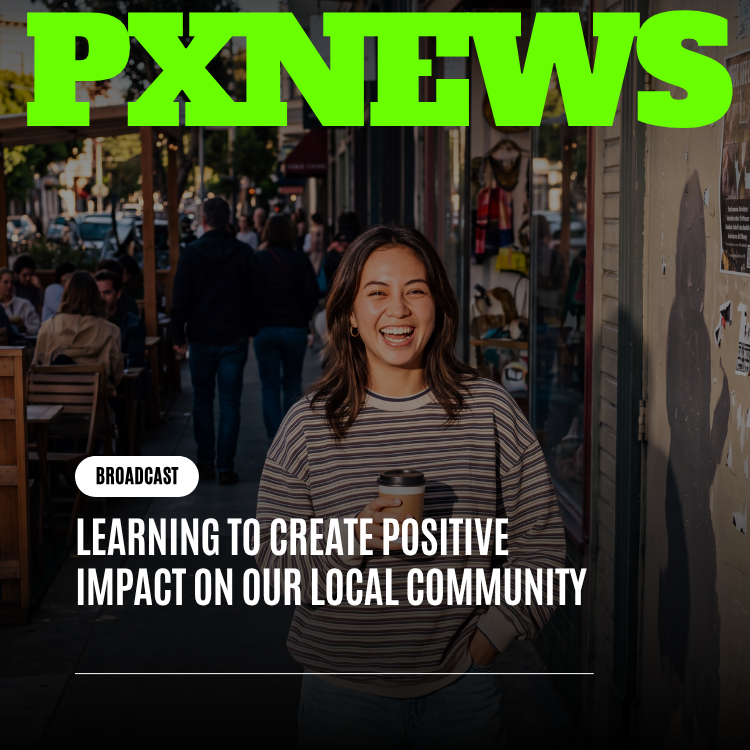
Every tech company eventually publishes something about giving back to its community. The formula is familiar: a check gets written, a photo gets taken outside a nonprofit's office, a paragraph goes into the annual report under corporate social responsibility, and the company moves on until the next cycle comes due. None of that is dishonest, exactly. It is just disconnected — impact treated as a department instead of a habit, something done to a community from the outside rather than built inside one. ETAPX is based in the Bay Area, and the Bay Area is also where most of the people who build Whistlr actually live. That changes what local impact has to mean, because the community isn't a market segment. It's the block.
The check-writing model breaks down close to home
Writing a check is the easiest form of corporate goodwill because it ends the obligation the moment the check clears. It requires no ongoing relationship, no showing up twice, no learning what a neighborhood actually needs versus what looks good in a press release. That model scales fine for a company whose employees are scattered across time zones and whose only local tie is a mailing address on a filing. It does not hold up for a company where the people building the product ride the same trains, eat at the same handful of restaurants, and run into the same local musicians and small business owners on weekends. When your team is embedded in a place rather than merely headquartered there, a one-time donation starts to feel less like generosity and more like an exit — a way to pay down an obligation instead of actually being part of something. It also means the failures are visible immediately — a promise that doesn't show up in the neighborhood the next month gets noticed by people who live there, not filed away in a quarterly report nobody outside the company reads.
What 'beyond the product' has to mean
The easy answer for a live-streaming company is to say the product itself is the impact — every creator who goes live with no follower minimum, every payout that lands in a day or two instead of thirty, is already a form of local economic participation if enough of those creators happen to live nearby. There's truth in that, and we'll get to it. But it's an insufficient answer on its own, because a product can do real economic good for a community and still leave the company itself a stranger to that community. Beyond the product means the people who work at ETAPX show up somewhere other than a keynote — at a local open mic, at a small venue's slow Tuesday night, at a community organization's volunteer shift — not because it's assigned, but because the office and the neighborhood are the same neighborhood.
The Bay Area is where the company lives, not a backdrop for it
It would be easy for a Bay Area company to treat the region the way a lot of tech does — as scenery. The bridges and the fog show up in the recruiting deck, the hoodie weather gets a joke in the all-hands, and the actual texture of the place stays mostly theoretical to people who spend their days in a building with catered lunch. ETAPX's approach starts from the opposite assumption: the company's founder and much of its early team came up around the same local music and creator scenes the product now serves, which means the Bay Area isn't a location that happens to host the office. It's the place that shaped what the product is supposed to do in the first place.
That grounding shows up in small, unglamorous ways more than in big ones. It's engineers who go to a friend's set on a Thursday because they actually want to, not because someone asked marketing to get a photo. It's the company treating local musicians, streamers, and small creators as people to learn from about what actually helps them, not as a focus group to extract insight from once and never call again. None of this is unique or heroic — plenty of local businesses operate this way by necessity, because their customers are also their neighbors. What's unusual is a tech company choosing to keep that constraint on purpose, even once it could afford to abstract itself away from the place it started. It also means the company hears about problems before they turn into headlines, because someone on the team is close enough to a local scene to notice when something in it needs help long before it becomes newsworthy.
Why fast, real payouts are also a community story
It's worth being specific about the part of this that actually is the product, because it's easy to wave at 'the product helps people' without saying how. When a viewer sends Gems to a creator during a live stream on Whistlr, that support is real-time and the payout lands in one to two days — not the thirty-day hold that's standard on a lot of platforms. For a working musician or a creator in the Bay Area covering a month where rent, gas, and gear all come due around the same week, the difference between money in two days and money in thirty isn't a footnote. It's the difference between being able to say yes to a gig that requires buying something first, or having to say no. A platform that treats a creator's cash flow as urgent, rather than as float the company gets to sit on, is making a bet about whose timeline actually matters.
- Showing up at local open mics and small-venue nights as attendees and occasional hosts, not just sponsors with a banner.
- Giving working local creators early access to new Studio and Storefront features before a wider rollout, in exchange for honest feedback.
- Volunteering time with community organizations in categories the team already cares about — music education, small-creator mentorship, neighborhood arts programming.
- Building the product's payout speed and low barrier to entry around the actual cash-flow reality of local creators, not an average user who doesn't exist.
- Treating a local venue's slow night or a small creator's rough month as something worth actually noticing, not just something to fix once it becomes a metric.
The tradeoff nobody likes to name
Here's the honest tension: staying genuinely local gets harder, not easier, as a company grows past its own neighborhood. Whistlr's creators are not only in the Bay Area — they're everywhere the app can be downloaded, and a platform built for anyone with no follower minimum has to serve people the founding team will never meet in person. There's a real risk in over-claiming a hyper-local identity for a product that is, by design, available everywhere. We're not going to pretend ETAPX's local presence somehow adds up to being 'for' the Bay Area more than any other place a creator streams from. What we can claim is narrower: the instincts that shape the product — fast payouts, low gatekeeping, taking a creator's time and money seriously — were formed by being embedded in one real place first, and that grounding doesn't disappear just because the product now reaches further than the neighborhood that taught it those instincts. Anyone can claim a local identity while operating like every other national platform; the harder, less quotable commitment is letting local instincts keep steering decisions even as the user base outgrows the neighborhood that formed them.
You can't fake having grown up somewhere. You can only decide whether the place you did grow up in still gets to shape decisions once you've outgrown needing it to.
— ETAPX, internal product principle
What honest measurement looks like here
Most community-impact reporting measures inputs — dollars donated, hours logged, events sponsored — because inputs are easy to count and flattering to publish. We'd rather be judged on something harder to fake: whether local creators who use Whistlr can point to specific, ordinary ways the company showed up for them outside the app, and whether the people who work at ETAPX can say the same about their own neighborhood without reaching for a talking point. That's a squishier bar than a dollar figure, and it's also the more honest one, because a precise number invites exactly the kind of box-checking this whole approach is trying to avoid. If the only evidence of local impact is a stat that survives a press release, it probably wasn't impact — it was inventory.
What this looks like going forward
None of this is a finished program with a name and a budget line — and it's worth being suspicious of any company that claims its community involvement is complete. What ETAPX is committing to is narrower and easier to check: keep showing up in the physical Bay Area as participants, not just as a company with an address there; keep listening to local creators, musicians, and small business owners as people who know things the team doesn't, rather than as a marketing asset; and keep building the parts of Whistlr — Gems, fast payouts, Business+, the WTC tab, Storefront — around the real economics of a working creator's week, local or not. The neighborhood was here before the product. That's a small, checkable promise rather than a sweeping one, and it's the kind we'd rather be held to.
Frequently asked questions
Where is ETAPX based?
ETAPX, the company behind Whistlr, is based in the Bay Area, which is also where most of the people who build Whistlr live. The company's founder and much of its early team came up around the same local music and creator scenes the product now serves. ETAPX treats the region as the place that shaped what the product is supposed to do, not as a backdrop.
How does ETAPX give back to its local community?
ETAPX focuses on showing up rather than writing checks. Team members attend local open mics and small-venue nights as attendees and occasional hosts, volunteer with organizations in music education, small-creator mentorship, and neighborhood arts, and give working local creators early access to new Studio and Storefront features in exchange for honest feedback. ETAPX says this is not a finished program.
Why do fast payouts matter for creators on Whistlr?
Fast payouts matter because a creator's bills do not wait thirty days. On Whistlr, Gems sent during a live stream pay out in one to two days instead of the thirty-day hold common on many platforms. For a working musician covering rent, gas, and gear in the same week, that can decide whether they can say yes to a gig that requires buying something first.
Is Whistlr only for Bay Area creators?
No. Whistlr's creators are everywhere the app can be downloaded, and the platform is built for anyone, with no follower minimum. ETAPX does not claim the product is for the Bay Area more than any other place. Its narrower claim is that the product's instincts, including fast payouts, low gatekeeping, and taking a creator's time and money seriously, were formed in one real place first.