Company · June 7, 2026 · 10 min read
The Diner Counter, the Bay Trail Loop, and How We Actually Build Whistlr
A day-in-the-life look at the Bay Area habits and rituals of the team behind Whistlr Live Studio — and how one of them settled a real product debate.
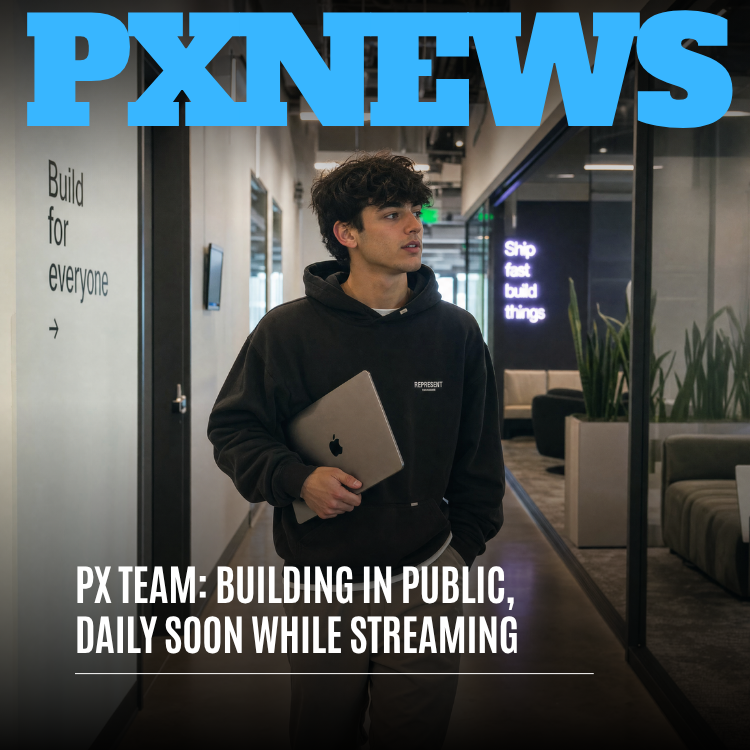
We build Whistlr Live Studio out of a converted warehouse office in San Mateo, ten minutes from the water, and after three years there the building has stopped feeling like a workplace and started feeling like the place where things just happen — arguments, decisions, the occasional bad idea that turns into a good one after someone sleeps on it. None of that is unique to us. Every small team develops its own geography. This is ours, in specific, unglamorous detail, and a couple of the moments below are ones that shaped features you've actually used on Whistlr.
Rosie's, and the 8:40 order that never changes
There's a diner two blocks from the office called Rosie's, and by 8:40 most mornings you can find at least three of us at the counter, not a table, because the counter is where you end up talking to whoever else is there instead of just your own group. The order is boring on purpose — the same breakfast burrito, most days, because novelty is for the work, not the coffee run. What isn't boring is what gets discussed over it. Rosie's is where half our actual roadmap gets pressure-tested, informally, before it ever makes it into a written doc, because it's easier to say "wait, that's a bad idea" to someone over eggs than in a meeting where it's already been announced.
The Bay Trail loop, for when the whiteboard stops working
About a quarter mile from the office, the Bay Trail runs along the water, and there's an unwritten rule that if you've been stuck on the same problem for more than an hour with nothing to show for it, you're allowed — expected, really — to just get up and walk it. Not as a break. As a debugging step. Something about not facing a screen or another person seems to loosen whatever was stuck. Our longest-tenured engineer swears the loop is exactly the right length: long enough that you can't half-solve something and immediately run back to your desk, short enough that you're not gone so long people start asking if you quit.
I've solved more real problems on that loop than at my desk, and I say that as someone who does not particularly like walking.
— A Studio engineer, on the Bay Trail habit
The whiteboard wall, and the day the payout debate happened at Rosie's
One wall of the office is whiteboard, floor to ceiling, and it's permanently half-covered in half-erased diagrams nobody's brave enough to fully wipe because you're never quite sure which one someone still needs. But the decision that ended up mattering most for how Whistlr actually pays creators didn't happen at that wall. It happened at Rosie's counter, on an ordinary Thursday, when two of us were arguing about payout timing over coffee refills.
The debate was blunt: does a creator earning Gems on a Tuesday night stream actually need to wait weeks to see that money, the way most platforms make people wait, or is that hold just inherited convention nobody had bothered to question? Somebody said the quiet part out loud — that a 30-day hold doesn't protect anyone, it just makes streaming feel like a maybe instead of a job. That conversation, not a formal planning meeting, is the reason payouts on Whistlr move in one to two business days instead of sitting in a monthly cycle. It's a small, specific example, but it's the kind of thing that happens constantly here: the real call gets made somewhere unplanned, and the meeting afterward just writes it down.
What actually got decided, in plain terms
- No 30-day hold on Gems — creators can request a payout the same night they earn it, with funds landing in one to two business days.
- The live Gems rail during a stream shows reactions in real time instead of batching them, because watching money show up while you're talking is what actually keeps a streamer engaged mid-broadcast.
- Verification for monetization was scoped to be fast, not a multi-week application, because the counter debate concluded a slow gate mostly punishes new streamers, not bad actors.
The Wednesday standup nobody stands for
Wednesdays are different. Instead of the usual conference room, standup happens on the loading dock behind the building, where there's exactly enough shade in the morning to fit the team if everyone stands close. Nobody remembers exactly how this started — the story depends on who you ask, and at this point asking has become its own running joke — but it stuck, and now a scheduling conflict that moves Wednesday standup indoors gets treated as a minor tragedy by the people who like it best. It's a small thing. It's also the kind of small thing that makes a Wednesday feel different from a Monday, which matters more than it sounds like when you're doing this five days a week, year after year.
The office dog, and why nobody minds when he votes
There's a dog in the office most days — not officially anyone's, more collectively adopted after one team member started bringing him in during a rough stretch and never really stopped. He has a spot under the standing desk closest to the whiteboard wall, which happens to be the desk people gravitate to when a debate is getting heated, so he's present for an unreasonable share of the decisions that matter. Someone, at some point, started joking that if the dog gets up and leaves mid-argument, the idea being debated is probably bad. It's a joke. It is also, according to at least two people who track this sort of thing with more seriousness than they'd admit, correct more often than chance would predict.
The commute nobody complains about
A fair number of the team could work fully remote and occasionally do, but most people show up anyway, and the honest reason isn't company pressure — it's that the commute itself is short enough not to resent and scenic enough to actually enjoy. Fifteen, twenty minutes along the water for most of the team, past the same herons at the same bend in the trail every morning, is a different proposition than an hour on a freeway. It's a small, unremarkable fact about where an office happens to sit, and it quietly shapes how often people are actually in the same room together, which in turn shapes how often a hallway conversation turns into a real decision instead of a Slack thread that drags on for two days.
Small rituals that quietly hold a small team together
None of these are policy. Nobody put them in a handbook. They exist because a group of people spending most of their waking hours building something together tends to invent its own habits whether you plan for it or not.
- Friday "ship lunch" — whoever shipped something that week picks where the team eats, no vetoes allowed, even for the person who picks the same taco truck every time.
- The office keeps a running tally, on a sticky note by the door, of how many days since the espresso machine last broke. It resets often.
- New hires get walked the Bay Trail loop on day one, less as a tour and more as an introduction to the unofficial rule that you're allowed to leave your desk when you're stuck.
- Nobody schedules meetings before 9:30, because the Rosie's counter crowd is unofficially sacred and everyone knows it.
Why this matters to a product, not just a culture page
It would be easy to read all of this as a nice story about an office and stop there. But the honest version is that a lot of what makes Whistlr feel the way it does — fast payouts, no follower gate to start earning, a Studio dashboard that shows creators the truth in real time instead of a flattering monthly summary — traces back to a small team that argues things out somewhere unglamorous, with no deck and no stakeholders watching, before it ever becomes a feature. The Bay Area part of this isn't really about the geography. It's that being in one place, running into each other at a diner counter or on a walk you didn't schedule, keeps decisions honest in a way a scheduled meeting rarely does.
None of this is a pitch for a particular office layout or a particular zip code. Plenty of good products get built by fully remote teams who've never met at a diner counter in their lives, and there's nothing magic about San Mateo specifically. What we'd actually argue for is smaller than that: that a small team building something as immediate as a live-streaming platform benefits from having a place, whatever it looks like, where the unscheduled conversation is allowed to happen and taken seriously when it does. For us that place happens to be a converted warehouse near the water. What matters isn't the address. It's that the place exists at all, and that the team actually uses it that way instead of just occupying it between meetings.
Frequently asked questions
Where is the Whistlr Live Studio team based?
The team behind Whistlr Live Studio works out of a converted warehouse office in San Mateo, in the Bay Area, about ten minutes from the water. The team has been in that building for three years. Most of the team commutes fifteen to twenty minutes along the water, and most people come into the office even though some could work fully remote.
Why does Whistlr pay creators in one to two business days?
Whistlr pays out in one to two business days because the team decided a 30-day hold does not protect anyone and just makes streaming feel like a maybe instead of a job. That decision came out of an informal debate at a diner counter near the office. Creators can request a payout the same night they earn Gems, with funds landing in one to two business days.
Does Whistlr show Gems in real time during a live stream?
Yes. The live Gems rail during a stream shows reactions in real time instead of batching them. The team chose this because watching money show up while you are talking is what keeps a streamer engaged mid-broadcast. The Studio dashboard follows the same idea, showing creators what is happening in real time rather than a flattering monthly summary.
Is Whistlr monetization verification a long application?
No. Verification for monetization on Whistlr was deliberately scoped to be fast rather than a multi-week application. The team concluded that a slow verification gate mostly punishes new streamers, not bad actors. Whistlr also has no follower gate to start earning, so a new creator does not need to build an audience before they can begin receiving Gems.