Company · August 28, 2026 · 11 min read
Whistlr Platform Improvements: Why Getting Bigger Raises Our Bar Instead of Lowering It
Whistlr platform improvements don't slow down as the community grows. Here's what scale changes for quality, stability and keeping the app personal.
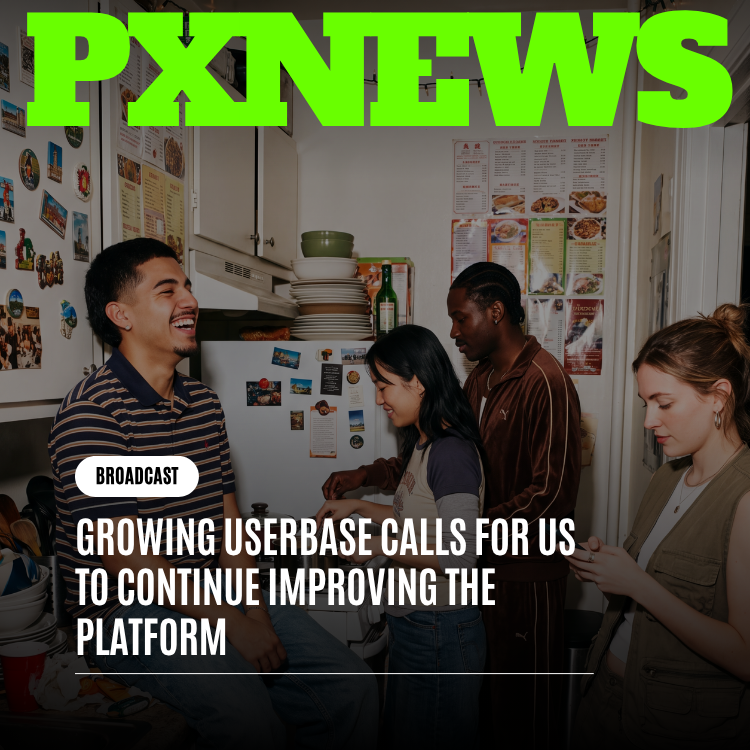
Whistlr platform improvements are speeding up in importance, not winding down, because the community keeps growing. More people are joining every week, and every one of them is trusting us with a piece of their daily life: their Circles, their relationships, their Storefront, their creative work. A bigger userbase doesn't give us room to coast. It means every rough edge touches more people, every new feature carries more responsibility, and the everyday parts of the app deserve more care than ever. This piece explains what growth actually changes for us, and what we've committed to as Whistlr gets bigger.
We're proud of the growth. More Circles are forming, more Waves are being shared, more Minis are being posted, and more friendships and communities are finding a home here. But we've learned to treat growth as a responsibility first and a milestone second. The rest of this article is about what that means in practice.
What changes when Whistlr gets bigger?
From the outside, growth looks like a number going up. From the inside, it looks like a steady, compounding pattern: people join, stick around and bring other people with them. New Circles form daily. New Storefronts open. New creators find Creator Studio and start building an audience around Minis, Waves and Live Shopping. Couples, co-founders and close friends confirm relationships on the platform because they trust it enough to be honest there.
Each of those is a person who chose Whistlr over the alternatives. That's flattering, and it's also a weight. Here's how we think about what scale changes:
| What grows | What it changes for us |
|---|---|
| The number of people using each feature | A rough edge we leave alone now frustrates far more people at once |
| The range of ways people use Whistlr | Circles, creator tools, Storefronts, Waves and Minis all need ongoing attention, not just the newest thing |
| How much of people's lives runs through the app | Stability and trust matter more than shipping fast |
| The gap between newcomers and long-time users | We have to serve people who just arrived and people who've been here since the beginning |
| The variety of perspectives in the community | We see problems earlier and from more angles, which raises our standard for what "done" means |
Why does a bigger community raise the bar for Whistlr platform improvements?
There's a tempting idea that once a platform reaches a certain size, it can relax into its current form and ride the momentum. We reject that completely, and the reason is simple arithmetic.
Imagine a feature people genuinely like goes untouched for a year while the number of people using it triples. Nothing about the feature got worse. But now three times as many people are quietly wishing it worked a little better, three times as many have noticed a small snag and said nothing, and three times as many small frustrations are piling up in the background. That isn't stability. It's a cost that grows every week we don't pay it.
So growth doesn't excuse slow iteration. It makes slow iteration more expensive, because more people are living inside whatever we decide not to fix.
Different people lean on different parts of Whistlr
A bigger Whistlr isn't just more of the same person. It's a wider range of people relying on the app for very different things. One person uses it mainly to stay close with a small Circle. Another is building a following through Creator Studio. Someone else runs a Storefront. Someone else discovers most of their new music through Waves, or expresses themselves through Minis edited in Whistlr Studio.
Every one of those uses deserves continued attention. The more people depend on each one, the higher the cost of letting any single part stall while we focus elsewhere.
When the numbers go up, we feel the weight before we feel the excitement. A bigger community is more people counting on us to keep paying attention, and that's the reason we push harder, not the reward for having pushed enough.
— The ETAPX team
How Whistlr balances new features with stability as it grows
One of the hardest calls we make is how to split our time between building new things and making existing things better. Chase announcements and the app fills with half-finished ideas. Spend everything on maintenance and the product slowly falls behind how people want to communicate and create. Neither extreme serves a growing community, so we hold both priorities at once, on purpose.
Why new features still matter
Standing still isn't neutral. A platform that never adds anything new gradually drifts away from how people actually live online, even if nothing in it breaks. That's why Whistlr keeps adding capabilities like these:
- Waves working with Apple Music, so shared songs are real, playable tracks.
- Minis getting their own in-app editor in Whistlr Studio.
- Flow, which lets creators stream to several platforms at once.
- WTC Gems, which give communities a way to recognize and support each other.
Why stability and polish matter even more
Polish decides whether all those new features actually feel good once you're inside them. A feature that ships fast but feels rough can wear down trust faster than a missing feature ever would, and at our current size, it wears it down for a lot of people simultaneously. As the community grows, we would rather take longer and ship something that feels considered than rush and spend the following months apologizing.
What higher quality looks like in practice on Whistlr
"Raising the bar" can sound like a slogan, so here's what it looks like in decisions we've actually made.
We took our time on Moods and Blips, the quick signals on the redesigned profile that show who you are right now. We took our time on the redesigned Relationship Status flow. In both cases, shipping sooner was possible. We held them back because a feature that touches identity and relationships has to feel right on day one; there isn't a gentle way to fix trust after you've damaged it in front of a large community.
Relationship Status is a good example of why that patience pays off. It was built to be mutual, consent-based and audience-controlled, and it crossed a 10,000-user milestone without a wave of unwanted tags or complaints. That outcome came from designing for the people involved before designing for speed.
- Taking longer on features that touch identity, relationships or trust.
- Treating the experience of a feature after launch as part of the work, not an afterthought.
- Refining newer additions like Halo, the redesigned profile and Relationship Status as more people live with them.
- Reserving real time for improvements that will never get an announcement.
How Whistlr stays personal as the community grows
The risk with any growing social app is that it starts to feel like a crowd. We think about this a lot, because the reason most people stay on Whistlr isn't scale. It's that the app feels like it has room for the small, close things: a Circle of five friends, a relationship you've chosen to share, a group chat that's been going for years.
Several of the platform's choices exist specifically to protect that feeling as more people arrive. Circles keep your closest people in their own space. Relationship Status only appears when both people confirm it, and only to the audience they pick. Halo, the soft ring on an avatar, signals that something is happening with someone without the exposure of a constant online-status light. None of those get less important as Whistlr grows. They get more important, because there are more people around whom you might not want to share everything with.
Picture the same app at two very different scales
Think about someone who joined early and has years of Thoughts and Stories on their profile, and someone who signed up last night after a friend sent a Waves link. The first person's expectations come from watching Whistlr evolve. The second person's come from the version they found yesterday. Both deserve an app that keeps getting better, and both deserve to feel like it was built with them in mind, not for some average user in the middle of a chart.
The everyday Whistlr improvements that never get announced
Most of your time on Whistlr isn't spent discovering a brand-new feature. It's spent doing ordinary things: posting a Thought, watching a friend's Story, reacting to a Mini, catching up in a group chat, scrolling for a few minutes before bed. Those moments are the bulk of what Whistlr is, and they deserve as much craft as any launch.
That's why a steady share of our time goes to quieter refinements in Thoughts, Stories, group chats and the general day-to-day flow of the app. You'll rarely see a post about them. You might not consciously notice them at all. But over months, they're a large part of whether the app feels smooth or slightly worn, and the more people use Whistlr every day, the more those small improvements add up.
People remember the big launches. What keeps someone on a platform for years is whether the everyday parts quietly keep getting better. We try to give the spotlight and the plumbing the same care, even though only one of them ever gets a headline.
— The Whistlr product team
Why a growing community makes Whistlr better, too
Growth isn't only a burden we carry. It also hands us something useful: a much wider view of how the app actually behaves for real people. A small, early community tends to be fairly similar, so it notices a narrow set of things. A larger one notices far more. A creator running Live Shopping on their Storefront spots friction a casual Circle member never would. A long-time user spots things a brand-new account can't.
We've come to treat that range as a gift. It's also why we'd rather hear from an engaged, occasionally demanding community than a quiet one. The people who tell us what's wrong are the people invested in what we build next, and as the community grows, the picture they give us gets sharper.
Which Whistlr platform improvements are we focused on next?
We're deliberately not publishing a detailed list. Plans shift as the community changes, and announcing something before it's ready can push a team into shipping it too early. What we can share is the general direction of our attention right now:
- Connecting self-expression across Circles, Thoughts, Stories and Minis so they feel like parts of one experience rather than separate tools side by side.
- Supporting creators in Creator Studio now that it has its own standalone home at whistlr.studio, as more people build real audiences and real income.
- Refining Halo, the redesigned profile and Relationship Status now that more people have lived with them long enough to show us what works.
- Keeping steady pressure on the unglamorous work: making everyday actions a little smoother and more intuitive every time we touch them.
If there's a common thread, it's that none of this happens in isolation from the people using the app. The bigger the community, the clearer the picture of where Whistlr needs to go.
Our commitment: growth is not a finish line
We want to be specific about this, because it would be easy to make a nice promise at one moment of growth and quietly let it lapse. Our commitment is a standing one. Every new wave of people joining Whistlr, every new Circle and every creator finding their footing in Creator Studio resets the clock rather than checking a box.
We won't treat the platform as finished in any of its current forms. We won't assume that what worked for the people who arrived first is automatically enough for those arriving now, or for the ones after them. And there's no version of "big enough" that lets us stop paying attention.
To everyone who has stuck with Whistlr while it grew, and everyone who just got here: thank you for trusting us with part of your day. That trust is exactly why we intend to keep making the next version better than the one you're using now.
Frequently asked questions
Is Whistlr still improving now that it's grown?
Yes, and growth is the main reason we keep pushing. A larger community means more people are affected by every part of the app, so the cost of leaving something unimproved rises. We keep adding new capabilities while reserving real time for polish and stability, including everyday refinements to Thoughts, Stories and group chats that rarely get announced.
Will Whistlr ship features faster as the userbase gets bigger?
Not at the expense of quality. With more people using every feature, a rushed or rough release frustrates far more of them than it would have earlier. We'd rather take longer on something like Moods and Blips or the Relationship Status flow and have it feel right at launch than ship quickly and spend months fixing it in front of a large community.
How does Whistlr keep feeling personal with so many new users?
Several features exist specifically to keep things close. Circles keep your nearest people in their own space. Relationship Status is mutual, consent-based and shown only to the audience you choose. Halo signals that something is happening with someone without broadcasting their online status. As the community grows, we treat those protections as more important, not less.
What kinds of platform improvements is Whistlr working on?
We don't publish a detailed list, because plans shift and pre-announcing features can push them out before they're ready. Our current focus includes connecting self-expression across Circles, Thoughts, Stories and Minis, supporting creators in Creator Studio at whistlr.studio, refining Halo, the profile and Relationship Status, and smoothing the everyday experience.
Does Whistlr's commitment to improving stop at a certain size?
No. We treat it as a standing commitment, not a promise tied to one milestone. Every new wave of people who join, every new Circle and every new creator in Creator Studio renews that responsibility rather than satisfying it. There isn't a size at which we consider Whistlr finished or stop paying close attention to how it feels to use.