Company · August 27, 2026 · 7 min read
The Summer We Stopped Shipping One Thing at a Time
A late-summer, early-fall look at what Whistlr actually shipped — new surfaces, safety investment, community work, and the bets that come next.
Round-up posts usually exist to make a quiet quarter look busy. This one is the opposite problem: an actual list of what shipped since June, trimmed down, because the full version reads less like a blog post and more like a changelog nobody asked for. Audio rooms went live. Profile skins went live. We put real money and real headcount behind safety and security work that produces no headline of its own. We showed up in person for community and local-impact work that has nothing to do with app downloads. And we started building the two things that will define the next year more than anything above: a new AI app, and the early architecture for something with music-industry scale in mind. None of that is one story. So instead of forcing a theme onto it after the fact, here is the honest version: what we built, why we built it in this order, and what it tells you about where Whistlr is actually headed.
Why a roundup post is worth writing at all
Most company update posts are written for investors who already know the numbers or for a press cycle that needs a hook. We don't have quarterly earnings calls, and this isn't a launch announcement for any one feature. The reason to write this down anyway is simpler: a platform is a series of bets made under time pressure, and the pattern in those bets says more than any single one of them does. Look at what actually got resourced this stretch and a shape appears. Two new surfaces for people to be seen and heard on. A security posture that got harder to break instead of easier to ignore. Time spent on communities that will never show up in an app-store review. And a bet on AI and on the music industry that has nothing to do with this quarter's growth metrics. That's not a random list. That's a company deciding what kind of platform it wants to be before it's forced to decide by an incident, a competitor, or a market shift it didn't see coming.
New surfaces: audio rooms and profile skins
Audio rooms and profile skins look like two unrelated feature launches. They're actually the same bet from two different directions. Audio rooms lower the bar for going live — no camera, no lighting setup, no performance anxiety about how you look, just a conversation people can drop into. Profile skins raise the ceiling on how a creator's page can look once they've built an audience worth dressing up for. One shrinks the barrier to entry. The other extends the runway for creators who've outgrown the default template.
- Audio rooms: live audio spaces that sit alongside video streaming, for creators who want a lower-friction way to go live from Studio or their own encoder.
- Profile skins: customizable creator profiles that break out of a one-size template, so a page can actually look like the person or brand behind it.
- Both ship inside the same no-follower-minimum, no-gatekeeping model Whistlr already runs on — nobody has to earn the right to try either one.
The tradeoff worth naming honestly: shipping more surfaces means more places for the team to keep safe, more places for Gems and payouts to work correctly, more places for a Storefront listing or a PX Shop drop to show up consistently. Breadth is not free. We think it's worth it because a platform with exactly one way to be a creator is a platform that only fits one kind of creator, and that was never the plan.
Safety and security: the work with no launch post of its own
Nobody writes a triumphant announcement about hardening an authentication flow or closing a gap in how payouts get verified before they land. That's exactly why it's worth mentioning here, because the incentive for any fast-moving platform is to defer that work until something forces the issue. We didn't want to be the company that upgrades its safety systems the week after a bad headline.
This stretch, that meant tightening review around Business+ applications and the WTC tab where creators publish and price the Gems viewers send them, so the account tier that unlocks real earnings stays trustworthy on both sides — for the creator getting paid and the viewer paying them. It meant putting more scrutiny on account security across the surfaces that touch money and identity. None of that shows up as a feature screenshot. All of it is the reason the fast, low-hold payout model is something we can keep promising instead of walking back.
Community and local-impact work
An app is not a community by default, and pretending otherwise is how platforms end up hollow. The community and local-impact work this stretch was deliberately not about acquisition. It was about showing up where creators actually live, in person, for reasons that have nothing to do with a download funnel. That distinction matters more than it sounds like it should. It is easy to fund a community initiative that is really a marketing campaign wearing a community hat. It is harder, and more honest, to fund the kind of local-impact work that doesn't convert cleanly into a metric anyone reports upward. We'd rather be the second kind. A platform that only shows up for its creators inside the app is a platform that's optimizing for engagement, not for the people. The local-impact work is the part of this update that's hardest to quantify and, not coincidentally, the part we're least willing to cut when priorities get tight.
The bets: an AI app, and music-industry scale
We're not trying to be a bigger version of what Whistlr already is. We're trying to build toward what live, creator-owned platforms look like once the tools around them catch up.
— AJ, ETAPX
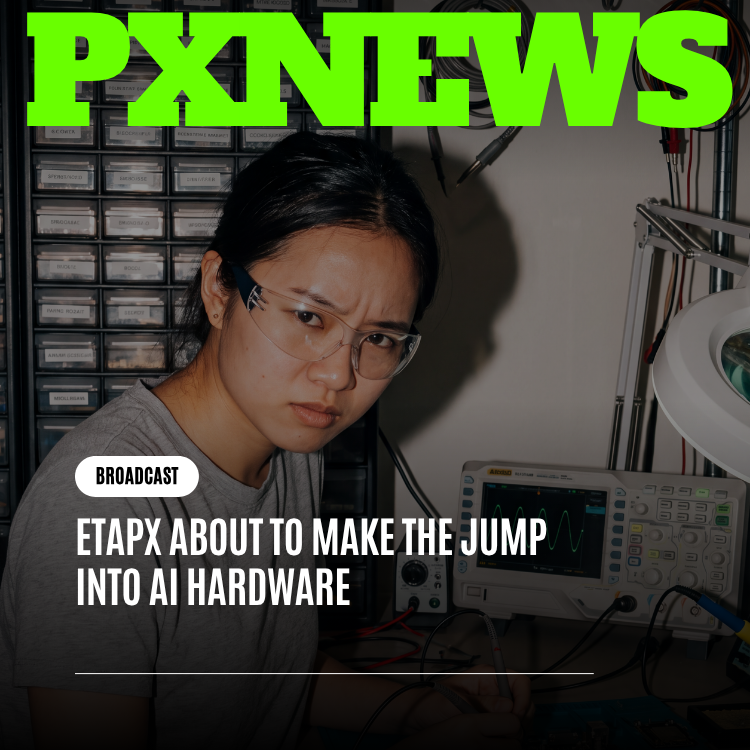
Everything above is maintenance and expansion of a model that already works. The new AI app is different in kind: it's an early bet, not a proven surface, and we're treating it that way internally rather than overselling it here. What we can say honestly is that ETAPX has always built more than one product at a time — Influxx, Ocsidian, and GLSRM all exist alongside Whistlr and Whistlr Creator Studio, the standalone desktop and web app at whistlr.studio — and the new AI work follows that same instinct: build the infrastructure before the market forces your hand on it. The music-industry-scale ambition is the more speculative of the two, and we're going to stay disciplined about not turning it into a promise we can't keep on a timeline we don't control. What we will say is why it's on the table at all: live streaming and independent music distribution have the same underlying problem, which is that the people creating the value are usually the last ones to see the money from it. Gems already prove that a platform can pay creators in real time with no long hold. Circuits and Flow already prove that close-circle and feed-based distribution can coexist on one platform without one cannibalizing the other. The question we're now asking is how much of that same model can be rebuilt at a scale that actually matters to an industry that has resisted this kind of change for decades.
What this stretch actually adds up to
Put the pieces next to each other and the throughline isn't season or momentum, it's sequencing. You don't harden security before you have money moving through the platform worth protecting. You don't fund local-impact work before you have a creator base rooted enough in real places to make that work mean something. You don't start a music-industry-scale bet before Gems and payouts have already proven the underlying mechanism at a smaller size. Every item in this update depended on something that shipped before it, which is a longer way of saying none of this was improvised.
What's next this fall
The fall is where audio rooms and profile skins stop being new and start being expected, which is the actual test of whether a feature was worth building. The AI app moves from an internal bet toward something creators can actually put hands on. And the safety and security investment keeps happening quietly in the background, because that's the only way it's supposed to happen. We'll keep writing these updates plainly, with the boring parts left in, because the boring parts are usually the ones that matter most a year later.
Frequently asked questions
What did Whistlr ship in summer 2026?
Since June 2026, Whistlr launched live audio rooms and profile skins. ETAPX also invested in safety and security work, including tighter review of Business+ applications and the WTC tab, and spent time on in-person community and local-impact work. It also began building a new AI app and early architecture with music-industry scale in mind.
How is Whistlr keeping Gems and payouts secure?
Whistlr tightened review around Business+ applications and the WTC tab, where creators publish and price the Gems viewers send them, so the account tier that unlocks earnings stays trustworthy for both creators and viewers. It also put more scrutiny on account security across surfaces that touch money and identity. That work supports Whistlr's payout model, in which payouts land in one to two days with no thirty-day hold.
Is ETAPX building an AI app?
Yes. ETAPX has started building a new AI app, which it describes as an early bet rather than a proven product. It follows the company's habit of building more than one product at a time, alongside Influxx, Ocsidian, GLSRM, Whistlr, and Whistlr Creator Studio. ETAPX says the AI app will move this fall from an internal bet toward something creators can actually use.
What are Whistlr's plans for the music industry?
ETAPX has started early architecture work with music-industry scale in mind, though it calls this its more speculative bet and avoids promising a timeline. The reasoning is that live streaming and independent music share a problem: the people creating the value are usually the last to see the money. Whistlr wants to see how much of its model, including real-time Gems payouts, can work at that scale.