Opinion · August 21, 2026 · 8 min read
Platforms Keep Moving the Goalposts. We Don't.
As algorithms, payouts, and policies keep shifting industry-wide, Whistlr bets on fast creator payouts and real community over chasing trends.
Every few months, another platform quietly rewrites its own rules. The algorithm gets retuned and reach that took a creator a year to build evaporates in a week. A monetization program gets restructured mid-cycle and payouts that used to be predictable get thinner, or slower, or both. A policy update lands with no warning and an account that broke no rule finds a feature capped or an earning stream frozen pending review. None of this is new by itself. What is new is the pace, and the fact that it is happening across the industry at once, not at any single app. Creators are living inside that churn right now, and most of them did not sign up to build a business on ground that moves under them every quarter.
The churn is not a glitch, it is the business model
It is tempting to talk about algorithm changes and policy churn like weather, something that happens to platforms rather than something platforms choose. That is not quite honest. Most large social platforms are built around attention as the unit they sell, and an algorithm tuned to maximize attention has to keep changing, because creators and audiences adapt to whatever the current version rewards. The moment a format works reliably, engagement around it flattens out, and the platform has an incentive to retune the system so nobody fully figures it out. Monetization programs tend to follow the same logic. A payout structure that looked generous at launch gets adjusted once a platform has enough creators locked in, because the terms that attracted people in the first place are not always the terms that scale most profitably once the audience is already there.
What that looks like for the person actually posting
From a creator's side, this rarely shows up as one dramatic event. It shows up as a slow erosion of trust in the platform's own signals. A follower count stops meaning what it used to mean. A view count that used to translate reliably into income starts translating into less of it, for reasons nobody outside the platform can fully explain. A creator who spent months studying what the algorithm rewards has to relearn the pattern, again, with no guarantee the new pattern holds for more than a season. Multiply that across an industry where several platforms are adjusting their rules in the same stretch of time, and the result is not a handful of unlucky creators. It is a general sense that the ground itself is unreliable, no matter which platform someone chose to build on.
Two ways to respond to an industry in flux
When the rules of a system keep shifting, there are really only two strategies available to anyone building on top of it. The first is to chase the shifts: study every algorithm change as it lands, adjust content and posting habits to whatever is currently being rewarded, treat the platform's changing incentives as the thing to optimize against. That strategy can work in the short term, and plenty of creators are genuinely good at it. But it means a creator's business is only ever as stable as the platform's next update, and it means the platform, not the creator, holds the actual leverage in the relationship.
The second strategy is to build on fundamentals that do not depend on any particular platform's mood: get paid quickly and directly for the value being created, keep the relationships that actually matter close and real instead of mediated entirely by a feed, and remove the artificial gates that make a creator's early momentum depend on an algorithm noticing them at all. That second strategy is slower to talk about, because it does not produce a dramatic before-and-after screenshot the way a viral algorithm shift does. But it is the strategy we built Whistlr around, on purpose, as a deliberate counter-position to industry churn rather than a reaction to any single change.
- Fast, direct payouts instead of terms that can be quietly renegotiated later.
- No follower minimum before a creator can go live and start earning.
- Close-circle sharing that does not depend on an algorithm choosing to surface you.
Payouts as a philosophy, not a feature
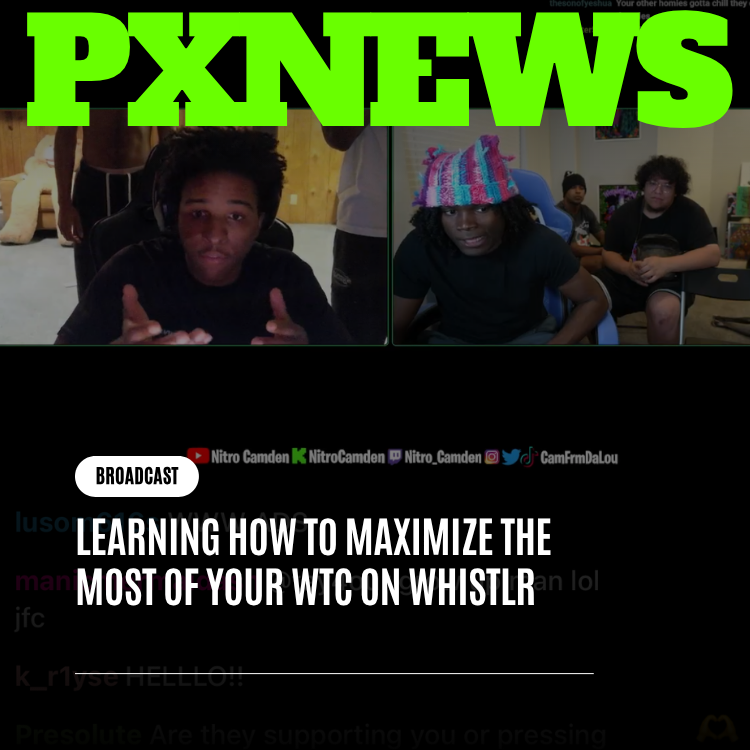
On Whistlr, viewers support creators in real time during a live stream by sending Gems, which convert directly into real-time monetary support for the person on screen. The mechanics matter less than the principle behind them: money should move from viewer to creator on a timeline measured in days, not a quarter. Payouts land in one to two days, with no thirty-day hold sitting between a creator earning something and actually having it in hand. A creator who unlocks Business+, the account tier that opens Gems, Earnings, and the WTC tab inside Creator Studio, is not applying for a payout structure that might change shape six months later once enough creators depend on it. They are opting into a system where the terms were designed to be simple and fast from day one, because a slow or unpredictable payout is itself a kind of churn, even when nobody calls it that out loud.
This is also why Whistlr treats going live as something that should not require permission from an audience a creator does not have yet. There is no follower minimum standing between a new creator and their first stream, whether they broadcast from the native Studio or come in through any RTMP encoder like OBS or Streamlabs. A platform that makes creators earn the right to be seen before they can earn anything from being seen is asking people to survive an algorithm's judgment before they get a fair shot at building something real. We think that ordering is backwards, so instead of tuning the gate, we removed it. The same instinct shows up in Storefront, where creators sell physical or digital goods directly, and in the standalone desktop and web version of Creator Studio at whistlr.studio. None of it depends on a creator first winning an algorithm's attention. It depends on a creator having something worth paying for and a fast, direct line to get paid for it, which is a fundamentally different bet than the one most platforms are making on reach.
Community you own, not reach you rent
The other half of the counter-position is about where relationships actually live. Feed-driven platforms are built to maximize reach, which sounds like a benefit until you notice what it optimizes away: a feed cannot tell the difference between a hundred strangers scrolling past a post and ten people who actually care what a creator is doing. Whistlr's Circuits and Flow are built around close-circle sharing on purpose, spaces sized for the people who are actually in a creator's corner rather than an audience an algorithm assembled and can just as easily reassemble differently tomorrow. We wrote about this directly in an earlier piece on why Whistlr should mix into someone's real life rather than compete for the hours in it, and the payout philosophy here is the same idea applied to money instead of attention: an app should add something durable, not extract activity and hand back something that depends entirely on a system staying the same shape it was yesterday.
A creator who has to relearn the algorithm every quarter is not building a business, they are managing a moving target. We wanted to give people ground that holds still.
— AJ, ETAPX founder and CEO
Close-circle sharing is not a smaller version of a public feed, it is a different kind of relationship entirely. A public post asks to be seen by as many people as an algorithm will show it to. A Circuits share asks to be seen by the people a creator actually chose. That distinction matters more, not less, in a period when industry-wide policy churn keeps changing what a public feed will and will not surface. A relationship built inside a close circle does not depend on a platform's latest ranking decision to survive.
Owned fundamentals are slower, and that is the point
We are not claiming Whistlr is immune to change, or that Studio, Storefront, and the rest of what ETAPX builds across Influxx, Ocsidian, and GLSRM will never need to evolve. Every product does. The claim we are actually making is narrower: the fundamentals should not be the thing that moves. Fast payouts, no follower minimum, and close relationships that belong to the creator rather than to a feed are not features we would trade away for a better engagement number next quarter. They are the floor everything else gets built on, and a floor is supposed to hold still even while the room above it keeps rearranging itself. That is also, honestly, the harder path to build a company around. Chasing whatever the industry currently rewards is faster to execute and easier to explain in a pitch. Building on fundamentals that refuse to chase anything takes longer to feel like it is working, because the payoff is durability, not a spike. But durability is exactly what creators are short on right now, in an industry where the rules keep changing out from under them one platform at a time. We would rather be the platform that never has to send an update explaining why the terms changed again.
Frequently asked questions
Does Whistlr have a follower minimum to go live?
No. Whistlr has no follower minimum between a new creator and their first stream. You can broadcast from the native Studio or come in through any RTMP encoder, such as OBS or Streamlabs. Whistlr removed the gate on purpose, because making creators earn the right to be seen before they can earn anything forces them to survive an algorithm before getting a fair shot.
How long do Whistlr payouts take?
Whistlr payouts land in one to two days, with no thirty-day hold between a creator earning money and having it in hand. Viewers support creators during a live stream by sending Gems, which convert into real-time monetary support for the person on screen. Whistlr treats fast, direct payouts as a fixed fundamental rather than terms that can be quietly renegotiated later.
What is Business+ on Whistlr?
Business+ is the Whistlr account tier that opens Gems, Earnings, and the WTC tab inside Creator Studio. Creators who unlock it opt into a payout system designed to be simple and fast from day one, with payouts landing in one to two days and no thirty-day hold. Creator Studio is also available as a standalone desktop and web version at whistlr.studio.
How is Whistlr different from algorithm-driven social media?
Whistlr is built on fundamentals that do not depend on an algorithm: fast, direct payouts, no follower minimum to go live and earn, and close-circle sharing. Its Circuits and Flow features are sized for the people actually in a creator's corner rather than an audience a feed assembles. A Circuits share is seen by the people a creator chose, so it does not depend on ranking changes.