Opinion · June 27, 2026 · 8 min read
Protecting Flowstate: Why Broadcaster Mode Exists and What It Guards Against
What "flowstate" means for a streamer mid-broadcast, why small notifications do more damage than big ones, and how Whistlr's broadcaster mode protects it.
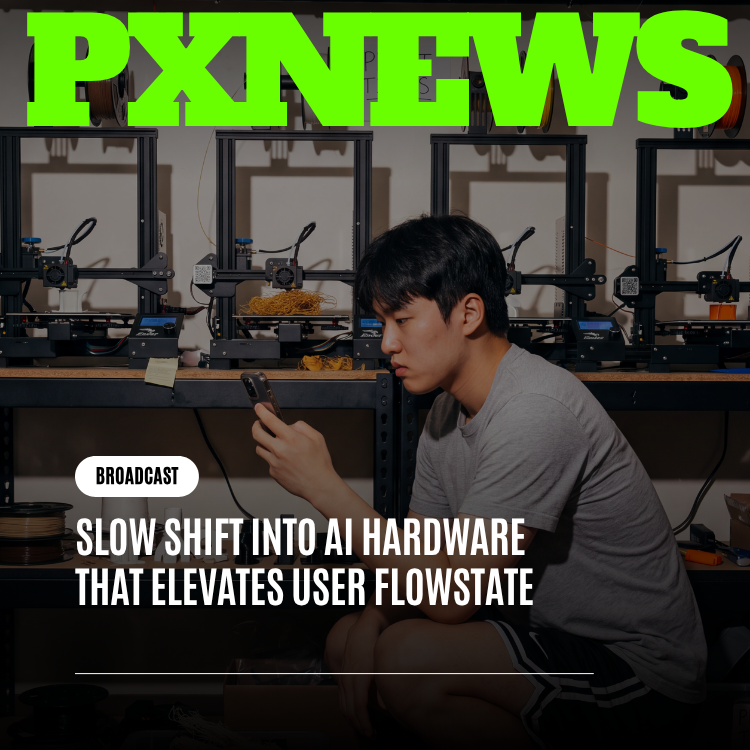
As ETAPX begins exploring AI hardware for the first time, the goal being described internally isn't a faster device or a smarter assistant — it's something quieter than that. The word that keeps coming up is flowstate: the state of being completely, uninterruptedly absorbed in what you're doing, where the tool in your hand recedes and only the thinking or doing in front of you remains. That's a company-level idea about a future product category. But it's also, almost exactly, the problem a streamer is fighting every single time they go live.
What breaks a streamer's flow isn't the big stuff
Ask a streamer what ruins a good broadcast and they'll usually describe something dramatic — a crash, a dropped connection, a troll. Those happen, but they're rare, and they're not actually what erodes most streams. What erodes most streams is smaller and constant: a text notification sliding in over the corner of the screen mid-sentence, a phone buzzing on the desk during a good moment with chat, an unrelated app alert stealing a half-second of attention right when a viewer just asked a question worth answering well.
None of those individually derails a stream. That's exactly why they're dangerous — they're each too small to justify stopping and addressing, but each one costs something real: a notification doesn't have to be urgent to extract a price. The price isn't the interruption itself, it's the slower rebuild afterward — the few seconds or longer it takes to find your place again, remember what you were mid-thought about, and get back to actually being present with the people watching you instead of half-present while your attention finishes settling.
The notification tax, applied to a live broadcast
Call it the notification tax: every ping costs you the rebuild, not just the glance. For most tasks, that tax is annoying but recoverable — you lose a bit of momentum on an email or a document and pick it back up. Streaming doesn't offer that same recovery room, because the audience is watching the gap in real time. A streamer who visibly loses their train of thought because something on their phone or desktop just lit up isn't just internally distracted — the whole room sees it happen, and it breaks the sense of presence that makes a stream feel worth watching over a pre-recorded video in the first place.
There's a second cost specific to streaming: the distance between a small task and the screen already in your hand. Checking one notification is rarely just checking one notification, because the device is already lit up and unlocked — one glance turns into replying to a message, which turns into checking something else, which turns into three unplanned minutes gone from a broadcast that was supposed to have your full attention. The tax compounds precisely because the tool that interrupted you is also the tool that makes it easy to stay interrupted.
| Interruption type | Immediate cost | Hidden cost |
|---|---|---|
| A single notification banner | A half-second glance | Seconds rebuilding where you were |
| Checking one thing on an already-unlocked device | One small task | Two or three more unplanned tasks follow |
| A visible loss of focus on stream | A pause in speech | Viewers register the gap, presence breaks |
Why this is exactly the problem broadcaster mode already solves
This is where the bridge back to Whistlr Live Studio is direct rather than aspirational: dedicated broadcaster mode exists specifically to remove the small, constant sources of the notification tax during a live stream. The idea isn't to make the tool smarter or faster — it's to make it recede, the same flowstate goal ETAPX is chasing at the hardware-exploration level, just already shipped at the software level for the one moment where it matters most for a creator: while the camera is on.
- Unrelated app notifications stay out of view during a live broadcast instead of sliding across the screen mid-sentence
- The interface stays oriented around the stream itself — chat, Gems, viewer count — not a dashboard of everything else competing for attention
- A streamer can stay present with their room instead of splitting attention between the broadcast and whatever just lit up elsewhere on the device
- The gap between noticing something and getting pulled away from the stream to deal with it gets closed, not widened
That last point is the connective tissue to ETAPX's hardware thinking more broadly. Whether the fix lives in a software mode you can turn on today or a device category that doesn't exist yet, the target is identical: shrink the distance between wanting to stay present and actually staying present, and remove the small stuff that keeps pulling people out of the moment they're trying to be in.
The best tool for a live moment is the one you stop noticing you're using. Broadcaster mode isn't about doing more — it's about the interface getting out of the way so the stream can hold the room's attention instead of splitting it.
— Internal framing on Whistlr broadcaster mode
What flowstate actually looks like on a good stream
It's easier to spot flowstate by what it produces than by defining it abstractly. A streamer in flow answers a chat question without breaking the rhythm of whatever they were already doing. They react to a Gem the instant it lands, not two beats later after mentally returning from somewhere else. Their attention moves fluidly between the game, the camera, and the chat because none of those things are competing with a fourth, unrelated thing trying to pull focus at the same time. Viewers can feel that fluidity even if they couldn't describe it — it reads as a streamer who's actually there, rather than one who's technically present but partially somewhere else.
The opposite is just as recognizable, and just as easy to miss the cause of. A streamer whose energy dips slightly every few minutes, whose responses to chat feel a half-step delayed, whose stream just feels a little flatter than it should given how good the content actually is — that's often not a content problem or an energy problem at all. It's an accumulated notification tax, paid in small increments throughout the broadcast, that never shows up as one visible event but adds up to a stream that never quite locks in.
Why ETAPX is taking its time with hardware instead of rushing it
There's a reason ETAPX isn't racing to ship a device on hype-cycle timing: a tool meant to protect someone's attention can't itself be the product of a rushed sprint. A rushed device tends to add its own layer of pings, alerts, and competing surfaces — the very thing it would need to eliminate to be worth building at all. Taking the slow path on hardware is consistent with the same instinct behind broadcaster mode: the goal is subtraction, not addition, and subtraction is much easier to get wrong by moving too fast.
Flowstate protection is not the same as isolation
It's worth drawing a clear line here, because protecting flowstate can sound, at first pass, like advocating for cutting yourself off entirely while live — no phone nearby, no other tabs, nothing but the stream. That's not the goal, and it's not what broadcaster mode is built around either. A streamer still needs to be reachable for genuine emergencies, and plenty of streamers run second screens or secondary tools that are part of the actual content, not a distraction from it. The distinction that matters isn't presence versus isolation, it's relevant versus irrelevant. A notification tied to the stream itself — a new Gem, a chat highlight, a co-host joining — belongs in the flow. A notification from an unrelated app that has nothing to do with the broadcast is the thing worth removing, because it's pure cost with no corresponding value to the moment.
That's the actual design principle behind broadcaster mode: not silence for its own sake, but relevance. Everything that's part of the stream stays visible and immediate. Everything that isn't gets pushed out of the way until the stream ends, when it's genuinely safe to catch up on it without costing the broadcast anything.
What this means for how you stream
If you're building a habit of going live regularly on Whistlr, flowstate is worth treating as something you protect on purpose, not something that happens automatically because the platform has a mode for it. Turn on broadcaster mode before you go live, not after you notice you've been distracted. Keep the device you're not streaming from somewhere it can't light up in your peripheral vision. The tools exist to remove the small stuff — the discipline to actually use them, every time, is still on you.
Frequently asked questions
What is broadcaster mode on Whistlr Live Studio?
Broadcaster mode is a dedicated mode in Whistlr Live Studio that removes small, constant distractions during a live stream. Unrelated app notifications stay out of view while you broadcast, and the interface stays focused on the stream itself: chat, Gems, and viewer count. The goal is for the tool to recede so a streamer can stay present with the people watching.
Does Whistlr broadcaster mode block all notifications?
No. Broadcaster mode is built around relevance, not silence. Notifications tied to the stream itself, such as a new Gem, a chat highlight, or a co-host joining, stay visible and immediate. Notifications from unrelated apps are pushed out of the way until the stream ends, when it is safe to catch up on them without costing the broadcast anything.
What does flowstate mean for a live streamer?
Flowstate is being completely and uninterruptedly absorbed in what you are doing, so the tool recedes and only the work in front of you remains. On a stream, it looks like answering chat without breaking rhythm, reacting to a Gem the instant it lands, and moving attention fluidly between the game, the camera, and chat. Viewers read it as a streamer who is actually there.
When should I turn on broadcaster mode before a stream?
Turn on broadcaster mode before you go live, as part of your setup routine, the same way you check your camera and mic. Waiting until you notice you are distracted means you have already paid the cost once. It also helps to keep any device you are not streaming from somewhere it cannot light up in your peripheral vision.