Product · September 14, 2026 · 10 min read
Late-Night Journaling: How We Designed in.between for the Hour Your Guard Comes Down
Late-night journaling needs a different kind of app. Why in.between is built for the minutes before sleep: slower pacing, a dimmer look and a quieter companion.
Late-night journaling works best with a tool built for that hour, and most journaling apps aren't. At 11 p.m. you're tired, the day's performances are over, and your thoughts tend to come out slower and more honestly than they would at noon. An app paced for a sharp, busy daytime brain feels wrong in that state: too bright, too quick, too eager to keep you engaged. in.between, ETAPX's AI-powered sleep and reflection journal, was designed for that late-night window specifically and almost no other. This piece explains what we noticed about how people actually journal before sleep, the design decisions that followed, and some tips for late-night journaling that apply whatever you write in.
Why late-night journaling feels different from journaling at noon
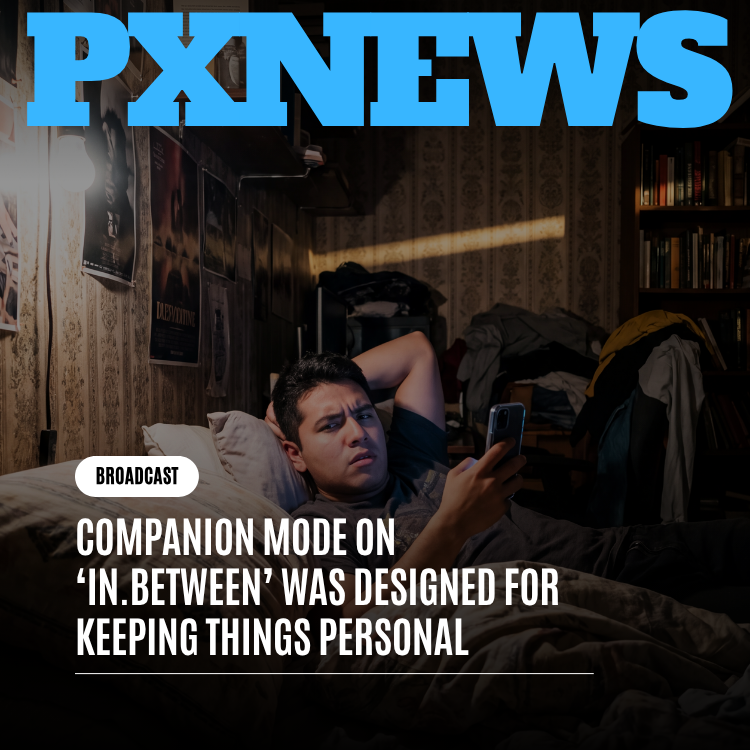
There's a version of most people that only appears after eleven. It isn't performing competence for a manager or keeping up with a group chat. The lights are low. The day's obligations have run out. For many people this is the first moment all day their mind is quiet enough to hear itself, which is either a relief or the opposite, depending on the day.
That state has a texture the rest of the day doesn't. A tired body lowers its guard. The small talk is over. Whatever was sitting underneath the day finally has room to surface. Many people find they're more honest with themselves right before sleep than at almost any other hour, and nothing mystical is going on: there's simply nothing left competing for attention.
It's also more fragile. A mind that's just let its guard down doesn't want to be jostled, hurried or made to feel productive. It wants something closer to company than to a tool. Building for that state, instead of for whenever someone happens to open an app, meant rethinking nearly everything about how in.between behaves.
What we learned watching when people actually used in.between
None of this started as a theory. Our team paid attention to when and how people were opening the app, and the pattern was far more concentrated than we'd expect from a typical wellness product. People weren't dipping in throughout the day. They arrived in one fairly narrow stretch of the evening, already partway toward sleep. Within that window, some consistent behaviors stood out:
- Sessions start slow. People type more slowly, pause longer between thoughts and rarely arrive knowing exactly what they want to say.
- Attention is narrow. A tired mind holds one thread comfortably and several badly, so branching menus and option lists turn into friction.
- Brightness reads as an alarm. A bright screen in a dim room doesn't just look wrong, it tells a winding-down brain to pay attention.
- People start mid-thought. Prompts that tried to redirect toward a tidier topic tended to get abandoned rather than answered.
- Sessions need a visible ending. At night, an interaction that keeps going can leave you more awake, not less.
That last one was the most uncomfortable to accept. In most software, a long session is a sign things are working. We had to unlearn that almost completely. A late-night session that keeps stimulating rather than settling isn't a success. It's a failure that happens to look like one on a chart.
Designing a late-night journaling app for one moment, not the whole day
The safer bet would have been a general-purpose journal, something you could reach for at lunch, after a tense meeting at 4 p.m., and again before bed. General-purpose widens the moments a product can claim. But it's a compromise, and it shows: a tool tuned to be reasonable at every hour tends to be excellent at none of them.
We bet the other way. We tuned in.between tightly to one recurring moment and let that tuning be the point. That meant deliberately not optimizing for things that make a midday app feel good, like quick capture, snappy interactions and prompts designed to pull you back for another round later. None of that serves someone lying in a dark room at the end of a long day.
| Typical daytime app choice | Why it fails at 11 p.m. | What in.between does instead |
|---|---|---|
| Fast, snappy transitions | Feel abrupt in a dim, quiet room | Slower, unhurried movement |
| Bright, high-contrast UI | Acts like an alert to a tired brain | Soft, low-contrast, dark-friendly by default |
| Lots of options and menus | Splits attention a tired mind can't spare | One thread at a time |
| Instant replies | Can read as pre-scripted rather than attentive | A little more room before a response lands |
| Celebrations, badges, confetti | Each one is a small jolt of alertness | No celebratory flourishes at all |
| Sessions that end abruptly | Leave you hanging rather than settled | Conversations that taper to a close |
There's a version of this app we could have shipped that would look great in a demo at 2 p.m., bright, snappy, full of prompts and options. It would have been the wrong app.
— The in.between team
Pacing built for a tired mind
Pacing is one of those things you only notice when it's wrong. Most apps are paced for alertness, with quick transitions and immediate feedback. That suits most software most of the time. It's exactly wrong for someone winding down.
We slowed in.between down on purpose, and kept slowing it down through development. Transitions that feel satisfying at midday read as jarring at midnight. We found that a little more space between sharing a thought and getting a response didn't feel like lag. It felt like consideration. A reply that arrives instantly can come across, in that tired state, less like attentiveness and more like a system that had its answer ready before it heard the question.
The same thinking shapes how sessions close. Most apps simply stop the moment you tap away. In in.between, a conversation settles rather than cutting off, which matters when the whole aim is to leave you calmer than you arrived, not just finished.
How Nalani talks after dark
Nalani, ETAPX's first purpose-built AI companion model, was designed from the start to be calm and attentive. But calm at noon and calm at midnight aren't quite the same thing, and the difference comes down mostly to restraint.
In the late-night context in.between lives in, Nalani favors shorter responses, leaves more space between exchanges and is reluctant to introduce new topics unprompted. A daytime companion might reasonably try to keep a conversation moving with another question or a new angle. Nalani is built to let things go quiet without treating quiet as a problem. With someone exhausted at 11 p.m., silence is often the right next move.
There's also the particular honesty that shows up late at night: the half-formed, offhand, sometimes messy thoughts people voice once the day's filters have worn off. Nalani isn't built to seize on those as an opening for deeper questioning. It receives them gently and lets you decide how far to take it. That restraint, more than any clever reply, is what earns trust over many nights.
Late at night, people say things they wouldn't say at 9 a.m., not because anything's wrong, just because they're finally not managing themselves so tightly. It doesn't pounce on an honest sentence. It sits with it.
— The in.between team
A visual design built to recede
Everything you see in in.between follows the same late-night logic. It's soft, low-contrast and muted, with nothing that asks to be stared at. It moves slowly. And it's dark-friendly by default in a way that goes beyond a color-scheme toggle: the whole look assumes you're in a dim room with eyes already adjusted to low light, and that you don't want your phone to undo that.
We treated low stimulation as a requirement, not a style preference. Plenty of apps compete for attention because attention is what they're built to capture. We rejected that goal for this product. in.between's interface tries to be forgettable in the way a comfortable room is forgettable: present, but never the thing you're focused on. Your attention belongs on your own thoughts.
You'll see that in small choices: fewer things moving at once, softer edges, longer pauses before anything new appears, and none of the confetti, badge pops or streak alerts many habit apps rely on. Those flourishes work by producing a little jolt of alertness, and that jolt is exactly what we spent so long designing out.
Who late-night journaling is for
When we describe in.between as built for 11 p.m., people sometimes assume it's for night owls. In practice the late-night window belongs to all kinds of people, because for many of them it's the only part of the day that isn't spoken for.
- A parent who finally gets the kids down at 9:30 and has a quiet half hour before collapsing, often with a sleeping partner beside them and no privacy to talk out loud.
- A line cook or nurse coming off a late shift, too wired to sleep immediately and too tired to do anything that needs real effort.
- A streamer who ends a broadcast close to midnight with the adrenaline still running and nobody left to talk to about how it went.
- A student who spends the evening on deadlines and only gets to think about anything else once the laptop is closed.
- Anyone whose day is full of other people, for whom bedtime is the first moment that belongs only to them.
What these people share isn't a sleep schedule. It's a state: tired, unhurried, finally off duty, and more willing to be honest with themselves than at any other point in the day. That's the person we design for, whatever time their clock actually says. If your quiet window is 9:45 rather than 11:30, the same reasoning applies. The pacing, the dim visuals and Nalani's quieter rhythm are built for the state, not for a specific hour.
It also explains why we offer voice as well as text. A parent next to a sleeping partner may need to type. A shift worker lying in the dark may find talking quietly far easier than tapping out sentences on a bright keyboard. The late-night window looks different for everyone, so the way in has to flex.
Why more engagement at 11 p.m. isn't a win
Narrowing in.between to one moment might sound like a limitation we accepted reluctantly. It was the strategy. Every feature idea and every instinct borrowed from daytime apps had to pass the same filter: does this serve someone at half past eleven, tired, in a dim room? Or does it just serve the idea of a more capable app? Ideas that failed got cut, even when they'd have tested well on their own.
What's left is narrower than a general reflection app, and better for it. You can still open in.between during the day if you want to. It just isn't tuned for that, and we're comfortable with it being a little out of place at lunchtime as long as it's exactly right at bedtime.
Tips for late-night journaling, whatever you use
The lessons we learned building in.between apply to late-night journaling in general, including with a paper notebook:
- Dim everything first. Lower the room lights and your screen brightness before you start.
- Start mid-thought. Don't try to summarize the day. Begin with whatever is loudest right now.
- Keep it to one thread. If a second topic shows up, note it in a word and come back to it another night.
- Allow short entries. Two honest sentences are a complete entry at 11 p.m.
- Skip the self-editing. Late-night writing is allowed to be messy. Nobody's grading it.
- End deliberately. Close with a line like "that's enough for tonight" so the session has a clear ending.
- Put the device down right after. Don't let journaling become the doorway into a scroll.
What in.between is not
Because so much of this piece is about honesty and the unguarded moments before sleep, it's especially important to be clear about the boundaries.
Building something this attuned to a vulnerable part of the day only works, in our view, if the limits around it are kept as carefully as the pacing and the tone.
Frequently asked questions
Is late-night journaling good for winding down?
Many people find that putting the day into words before sleep helps their thoughts settle, especially when the journaling itself is calm and brief. It works best with dim lighting, short entries and a clear ending, so the session doesn't turn into more stimulation. It's a reflection habit, not a sleep treatment.
Why is in.between designed for nighttime use?
ETAPX's team noticed in.between was used overwhelmingly in a narrow window right before sleep, when people are tired, unguarded and more reflective. Rather than build a general-purpose journal, the team designed pacing, visuals and Nalani's conversational rhythm specifically around that late-night moment.
What does low-stimulation design mean in in.between?
It means avoiding the bright colors, quick transitions and celebratory flourishes common in other apps, because each one adds a small jolt of alertness. in.between uses soft, low-contrast, dark-friendly visuals, slower movement and conversations that taper to a close, so the interface recedes and your attention stays on your own thoughts.
Can I use in.between during the day?
Yes, you can open it whenever you like. It just isn't optimized for daytime. Its pacing, visual tone and Nalani's conversational rhythm are all tuned for the wind-down before sleep, so it may feel a little slower and quieter than you'd expect from an app at lunchtime. That's intentional.
Is in.between a replacement for therapy?
No. in.between is a wellness companion and Nalani is a wellness companion model, not a licensed therapist, medical device or substitute for professional mental health care. It offers a calm space for reflection at the end of the day and is designed to encourage professional support when a situation calls for more.